
Scherpenheuvel: Belgium’s most important Pilgrimage Site
 © VisitBelgium.net
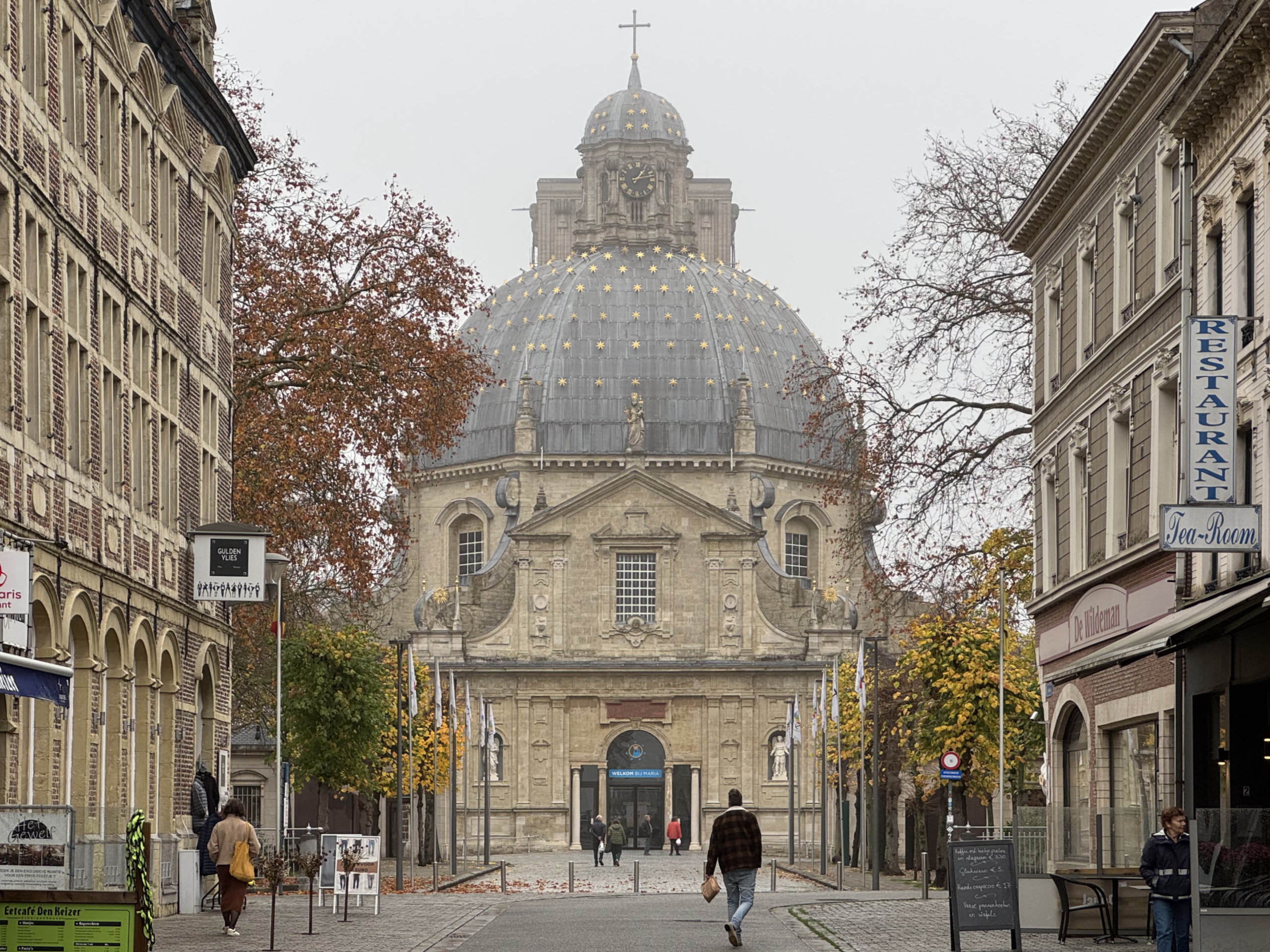
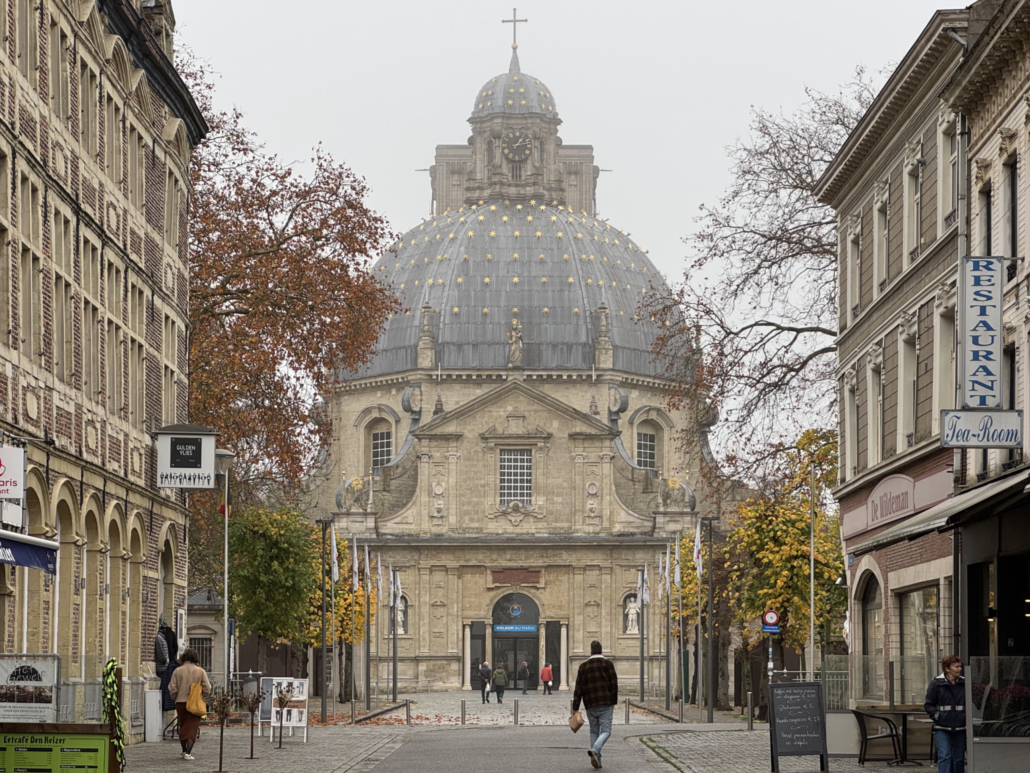
Scherpenheuvel is the most visited pilgrimage site in Belgium. Every year, hundreds of thousands of pilgrims and visitors come to the Basilica of Our Lady of Scherpenheuvel. The history of this Marian shrine begins with an oak tree and leads to an extraordinary church-building and urban planning project of the 17th century. Not only was a new church built here, but an entire town was created, with its layout centred on the shrine.
A Pilgrimage Town in the Hageland
Today, Scherpenheuvel forms part of the municipality of Scherpenheuvel-Zichem in the province of Flemish Brabant, approximately 50 kilometres northeast of Brussels. It lies in the Hageland region, between Aarschot to the west and Diest to the east. The name Scherpenheuvel means “sharp hill”, although the basilica stands not on a mountain but on a small rise. Its dome is already visible from the roads approaching the town.
From the Oak Tree to the Basilica
The origins of Marian devotion at Scherpenheuvel are traced back to the Middle Ages. An account dating from 1304 describes an oak tree with an unusually cross-shaped growth between Zichem and Diest, traditionally associated with Scherpenheuvel. However, it is uncertain when an image of the Virgin Mary was first placed there. Later traditions tell of a statue of Mary attached to the oak tree and of healings attributed to it. The original image disappeared around 1580 during the religious conflicts of the period. The oakwood statue venerated today, measuring 30.5 centimetres in height, was installed in 1587 and had belonged to Agnes Fredericx of Diest.
In 1602, the parish priest of Zichem had a wooden chapel built, followed by a stone chapel in 1603–1604. The oak tree was subsequently felled on the orders of the Church, as pilgrims had been removing pieces of its bark and wood in the belief that they possessed healing powers.
A decisive boost to the pilgrimage came through the interest of Archduke Albert and Archduchess Isabella, who visited Scherpenheuvel as pilgrims in 1603. As rulers of the Spanish Netherlands, they supported the shrine as part of the Catholic Counter-Reformation. In 1607, they commissioned their court architect, Wenceslas Cobergher, to design a new church and town. The foundation stone was laid on 2 July 1609, and in 1627 the church was consecrated by Jacobus Boonen, Archbishop of Mechelen, in the presence of Isabella. From 1627 onwards, priests of the Congregation of the Oratory were responsible for the pilgrimage. Remains of their former monastery can still be found beside the church.
A Masterpiece of Counter-Reformation Art and Architecture
Cobergher designed a seven-sided central-plan church surrounded by six chapels and a monumental entrance. The building is regarded as the oldest domed church in the historic Low Countries. Its lead-covered dome is decorated with 298 gilded seven-pointed stars, while the square bell tower houses a carillon of 49 bells. The recurring number seven refers to the Seven Joys and Seven Sorrows of Mary.
The layout of the town also follows this geometric concept. The basilica stands at the centre of a star-shaped plan that originally included seven bastions and three town gates. Most of the fortifications have disappeared, but the distinctive arrangement of the streets and the square surrounding the basilica remains recognisable.
Van Loon, de Nole and the miraculous Image
The artistic decoration is one of the main reasons to take a close look at the basilica’s interior. Theodoor van Loon, a Flemish Baroque painter and contemporary of Rubens, created seven monumental paintings depicting scenes from the life of the Virgin Mary. Six hang in the side chapels, while the seventh is displayed at the high altar. They include the Meeting of Joachim and Anne at the Golden Gate, the Birth of the Virgin Mary and the Assumption of Mary into Heaven.
Van Loon’s painting style reveals the influence of Italian art, particularly that of Caravaggio. The paintings have survived as a complete cycle in the very church for which they were created. Their subjects range from events drawn from extra-biblical traditions concerning the Virgin Mary to the Assumption, celebrated in Catholicism as Mary’s being taken up into Heaven.
In 1622, Cobergher commissioned the sculptor Robrecht de Nole to create the monumental high altar and other sculptural works. These include six marble statues of Old Testament prophets in the central space of the church. Above the altar, an artificial oak tree recalls the origins of the pilgrimage. The clothed miraculous image of the Virgin Mary stands in a silver niche above the tabernacle.
The stained-glass windows were not created until the 19th century, when they were made by Samuel Coucke. They depict, among other subjects, historical figures and scenes of miracles attributed to the Virgin Mary.
Famous Pilgrims and Visitors
Among the most prominent pilgrims were the shrine’s patrons, Albert and Isabella. In 1650, Fabio Chigi visited the sanctuary; five years later, in 1655, he became Pope Alexander VII.
Saint John Berchmans and the beatified priest Edward Poppe also made pilgrimages to Scherpenheuvel. Saint Damien de Veuster said farewell to his mother here before departing on his missionary journey. A bronze sculpture installed in the basilica in 2010 commemorates him.
The shrine also has a special connection with Karol Wojtyła, the future Pope John Paul II. He was due to lead a Polish pilgrimage to Scherpenheuvel in 1973 but was unable to attend and instead sent a message to the pilgrims.
Significance today
Scherpenheuvel remains Belgium’s most visited Marian pilgrimage site. Particularly in May, numerous groups of pilgrims come to attend religious services and processions. Many traditionally make the journey on foot.
The miraculous image of the Virgin Mary was crowned by papal authority in 1872. In 2011, the shrine received a Golden Rose donated by Pope Benedict XVI.
Alongside participation in religious services, lighting votive candles, praying the Rosary and following the Stations of the Cross remain integral parts of the living pilgrimage tradition.
The basilica is therefore not only an important monument of Baroque architecture but also an active centre of religious life to this day.

 © VisitBelgium.net
 © VisitBelgium.net
 © VisitBelgium.net
 © VisitBelgium.net
 © VisitBelgium.net
 © VisitBelgium.net
 © VisitBelgium.net