
Everyone is crazy about Belgian Waffles
 © VisitBelgium.net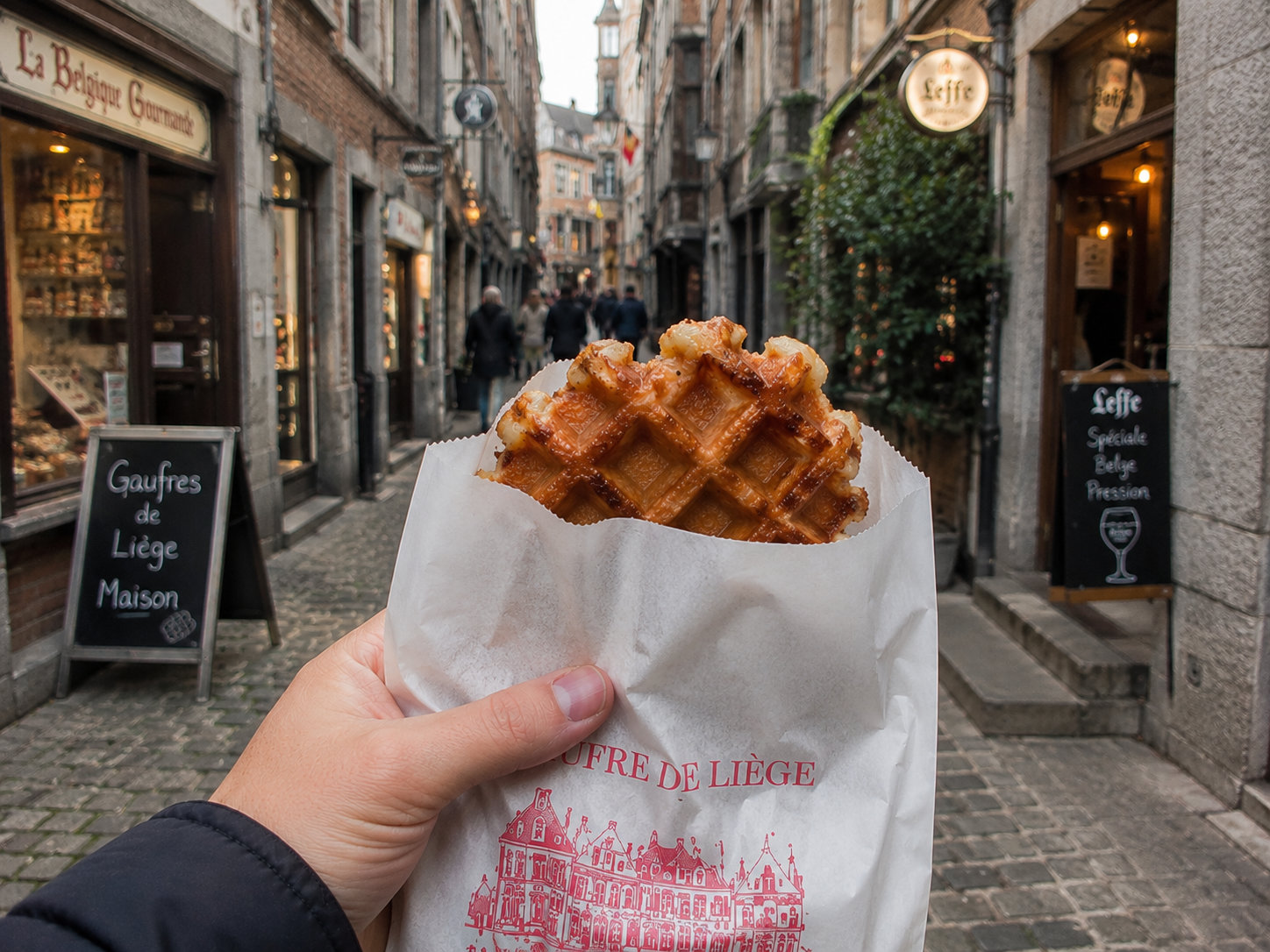
Belgium is fries, chocolate, beer. For decades, that was the country’s culinary trinity. But anyone scrolling through YouTube videos or Instagram reels about Belgium today quickly gets a different impression: apparently the entire country now consists of waffles. More specifically, Liège waffles.
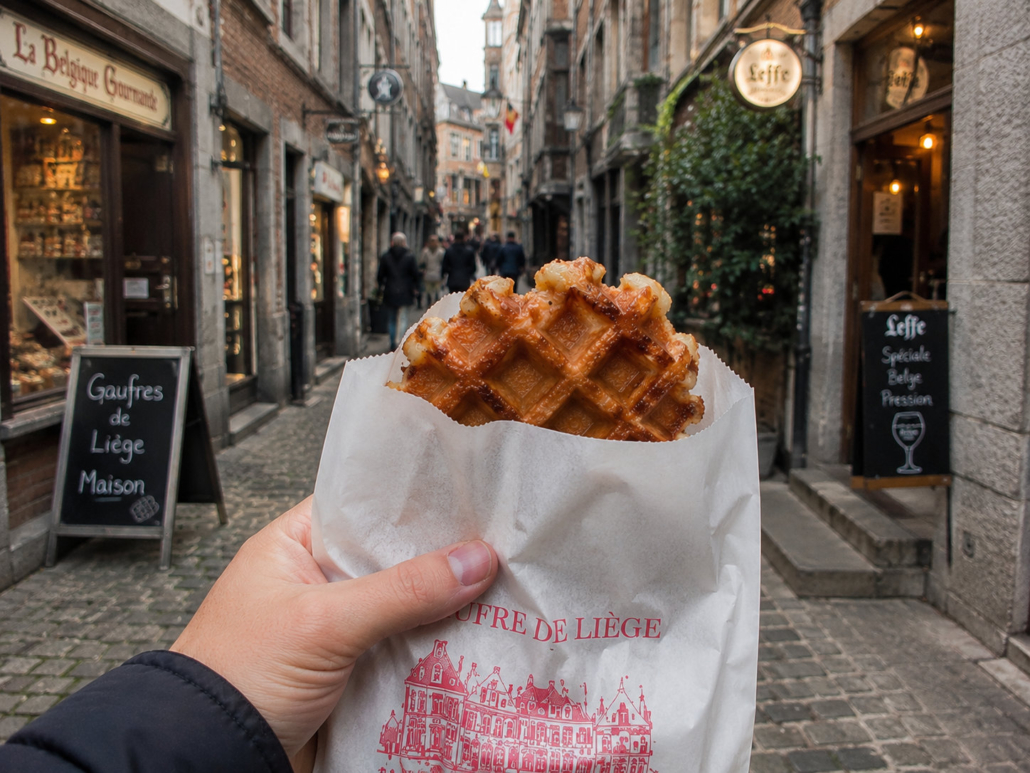
Hardly any travel video from Brussels or Bruges begins without someone first holding a caramelized waffle up to the camera. Golden brown, glossy, heavy, often still steaming. Belgian waffles have become social media stars. But in reality, there is no single Belgian waffle. Belgium actually has several completely different waffle traditions.
Liège Waffles
Without question, the most famous of them at the moment is the Liège waffle. And honestly, the hype is not entirely undeserved. Liège waffles have very little in common with classic waffles. They are made from a heavy yeast dough with chunks of sugar folded into it, which caramelize on the outside during baking. The outside becomes both crispy and sticky, while the inside stays soft and almost brioche-like apart from the sugar crystals. These waffles rarely look perfectly. Some spread out unevenly, others are slightly too dark. That is exactly what makes them special.
The key point is this: a real Liège waffle does not actually need any toppings. It is already dessert enough on its own. In Belgium, people therefore often eat it plain, straight from the hand while walking down the street. Tourist shops love piling whipped cream, strawberries, and chocolate sauce on top, but the classic version comes without any decoration at all. Besides the standard vanilla version, traditional waffle stands also offer varieties with cinnamon in the dough.
Brussels Waffles
The Brussels waffle is almost the complete opposite. It looks nearly too perfect. Rectangular, even, with large deep pockets and a much lighter batter. While the Liège waffle is heavy and caramelized, the Brussels waffle feels elegant and airy. It contains less dense dough and comes across as crispier and drier.
Precisely because of its stable deep pockets, the Brussels waffle is ideal for toppings. Powdered sugar is the classic option, though of course mountains of whipped cream, fruit, and chocolate sauce also end up on top. Unlike the Liège waffle, the Brussels waffle almost seems to be waiting to be decorated. Perhaps that is exactly why it became the perfect tourist waffle – though it is increasingly overshadowed by the Liège waffle.
Fruit-filled Waffles
Much less well known are the filled Belgian fruit waffles mainly found in bakeries. At first glance, they look rather unimpressive: rectangular, very shallow pockets, boring. But take a bite: inside they are generously filled with cherries, plums, pineapple, vanilla cream, or chocolate cream. While tourists mostly search for the famous street waffles, these filled waffles belong more to Belgium’s quiet everyday food culture. They can also be found in supermarkets, usually near the refrigerated pastries. In particular, the waffles made by the company “Ô Bel Gaufre” from Aubel are very popular.
Butter / Biscuit Waffles
And then there is a fourth waffle world that receives far less attention: Flemish waffles. Brands like Jules Destrooper have almost cult status in Belgium. Thin butter waffles, crispy waffle biscuits, and nostalgic cookie tins have been just as much a part of coffee culture there for generations as beer and chocolate are part of everyday life. While tourists outside photograph caramelized Liège waffles, Belgians sit inside with coffee and biscuit tins.
Try them all
Perhaps that is exactly what makes Belgian waffles so fascinating: behind the Instagram hype lies not one single specialty, but an astonishingly diverse waffle culture. Some waffles are street food, others are desserts, and others are more like coffee biscuits. And that is precisely why it is worth not searching for only one famous waffle when visiting Belgium.
Note: Sorry, for once I’ve used an AI-generated image. I’m always so keen on waffles that I forget to take a photo.
 © VisitBelgium.net
 © VisitBelgium.net
 © VisitBelgium.net
 © VisitBelgium.net
 © VisitBelgium.net
 © VisitBelgium.net
 © VisitBelgium.net
 © VisitBelgium.net
 © VisitBelgium.net
 © VisitBelgium.net
 © VisitBelgium.net
 © VisitBelgium.net
 © VisitBelgium.net
 © VisitBelgium.net