Tag Archive for: Namur

Belgium is a country with a long railway tradition. In 1835, the first railway line on the European continent opened between Brussels and Mechelen. Almost two centuries later, the history of Belgium’s railways can still be traced particularly well through its stations.

The most interesting stations are not necessarily the largest or the most beautiful. Some impress with their architecture, others with their location or an unusual technical solution. Antwerp combines a historic railway cathedral with a modern underground through station. In Brussels, one of the country’s most important stations lies almost invisibly beneath the city center. Liège and Mons showcase two very different designs by Santiago Calatrava, while in Oostende you practically step off the train straight into the harbour and seaside setting.

These five stations are, in my view, the most interesting in Belgium. They are joined by five more that are also well worth a closer look.

Antwerpen-Centraal – the Railway Cathedral
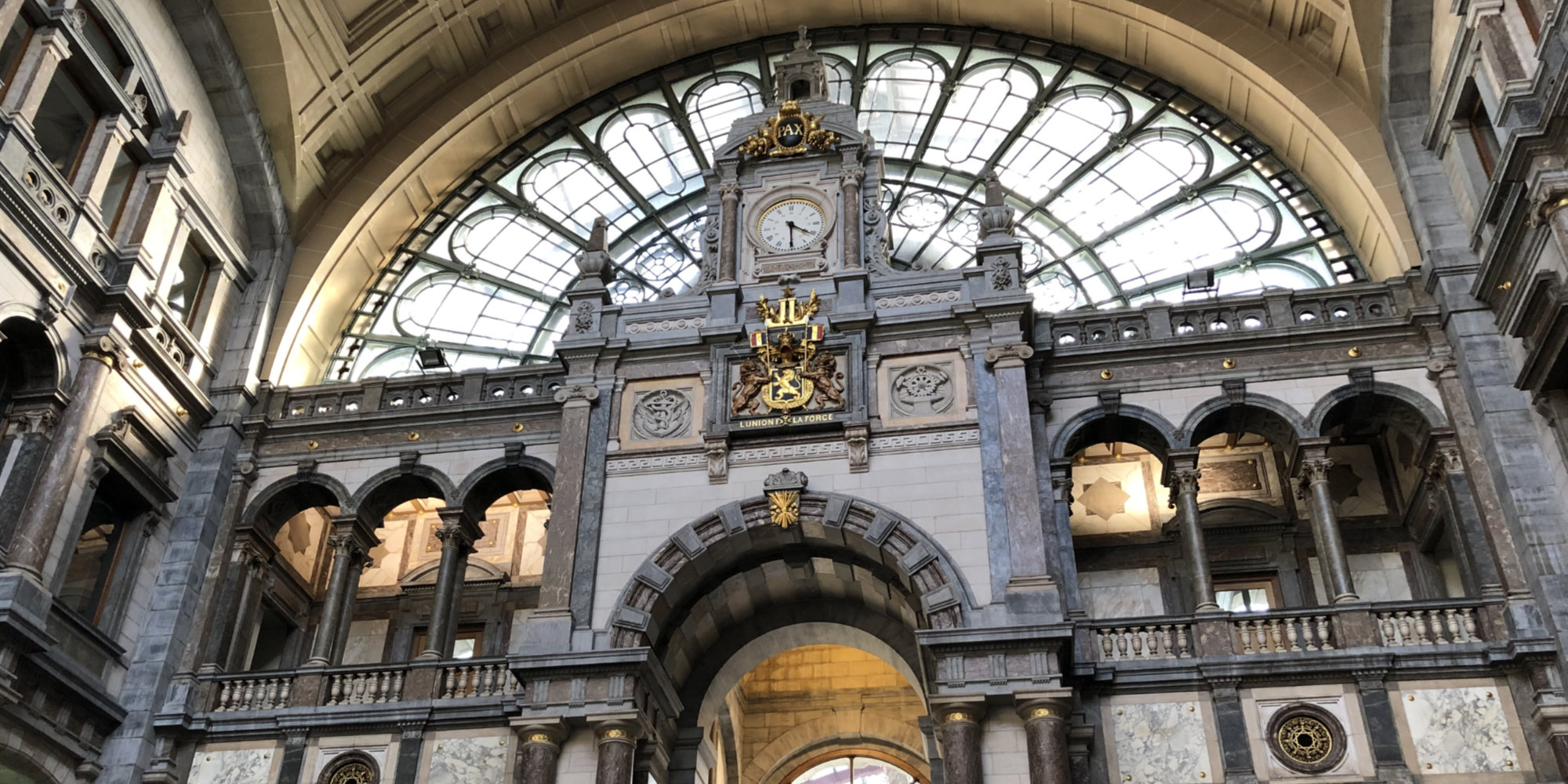
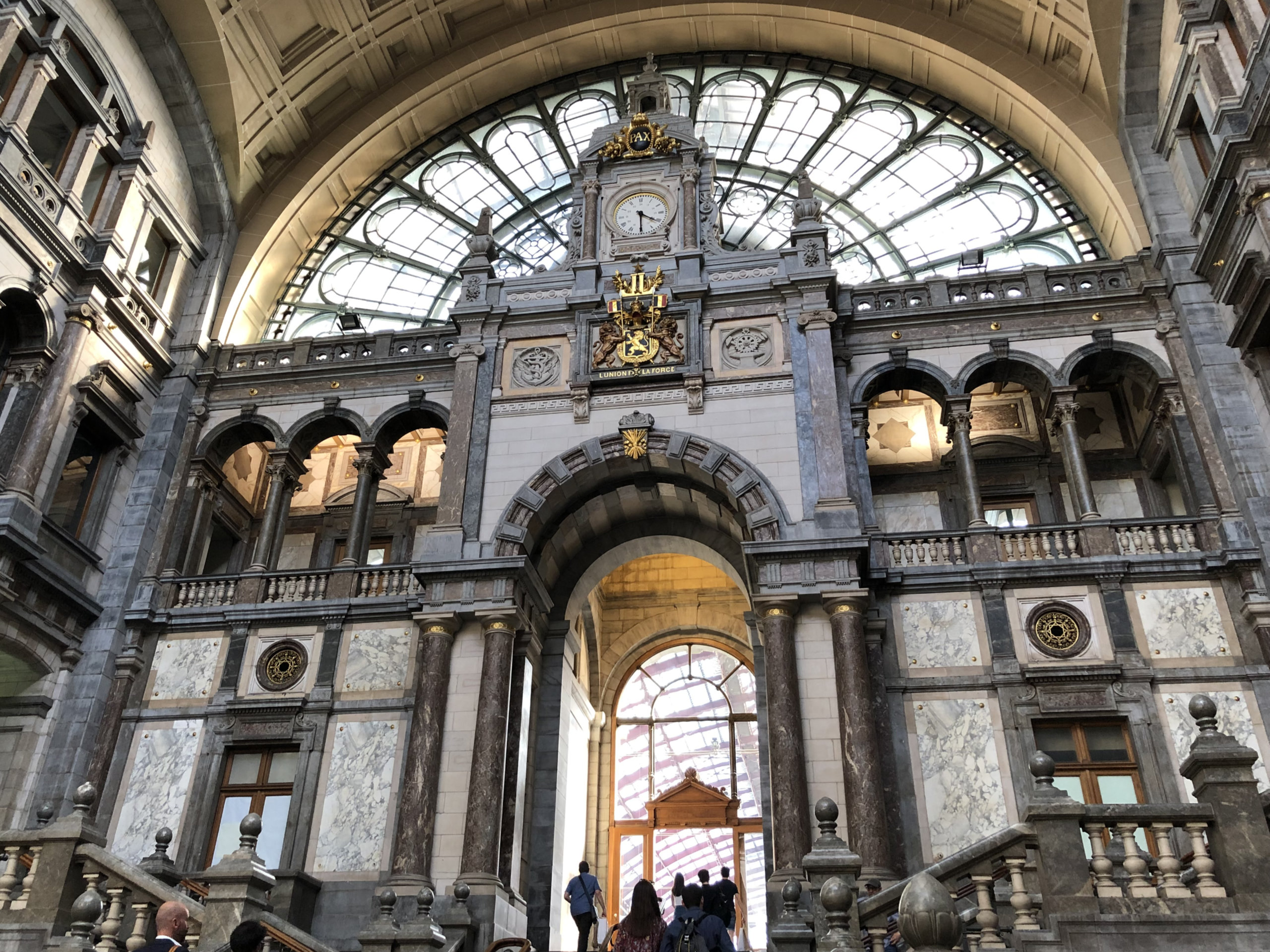
In the case of Antwerpen-Centraal, the nickname is, for once, no exaggeration: “Spoorwegkathedraal”, or railway cathedral, suits this station better than almost any other in Europe.

The grand entrance and former ticket hall already feels more like a prestigious palace than a transport building. Above it rises a monumental domed structure with large expanses of glass. Staircases, galleries, columns, natural stone, and an enormous wealth of historicist detail make it easy to forget that the building was originally intended above all to serve a very practical purpose. The station building, designed by Louis Delacenserie, was constructed around the turn of the 20th century and completed in 1905.

Behind it lies the historic train shed with its steel-and-glass construction. It was largely designed by engineer Clément Van Bogaert and entered service as early as 1898. Its impact comes above all from its height, its elegant arches, and the contrast with the stone station building. However, you should not expect a gigantic train hall with endless platforms: compared with the monumental appearance of the station, the historic track area feels surprisingly compact.

The truly remarkable part lies beneath it. Antwerpen-Centraal was originally a terminus. Between 1998 and 2007, the new north-south rail link was built beneath the historic station and parts of the city. It transformed Antwerpen-Centraal into a through station and made it possible for trains – including international high-speed services toward the Netherlands – to run directly beneath the old station.

To achieve this, the station was extended deep underground. If you remain upstairs in the historic hall, it is easy to overlook this. Only when you look into the central open space do you realize that several additional levels extend beneath the Belle Époque architecture and that the railway continues far below the old station.

That is what makes Antwerpen-Centraal so extraordinary: the historic station was not replaced by a modern new building. Instead, an entire second railway world was constructed beneath it. The cathedral above, the modern through station below – it is hard to imagine a more impressive way of illustrating the development of the railway.

Bruxelles-Central / Brussel-Centraal – the Station beneath the City
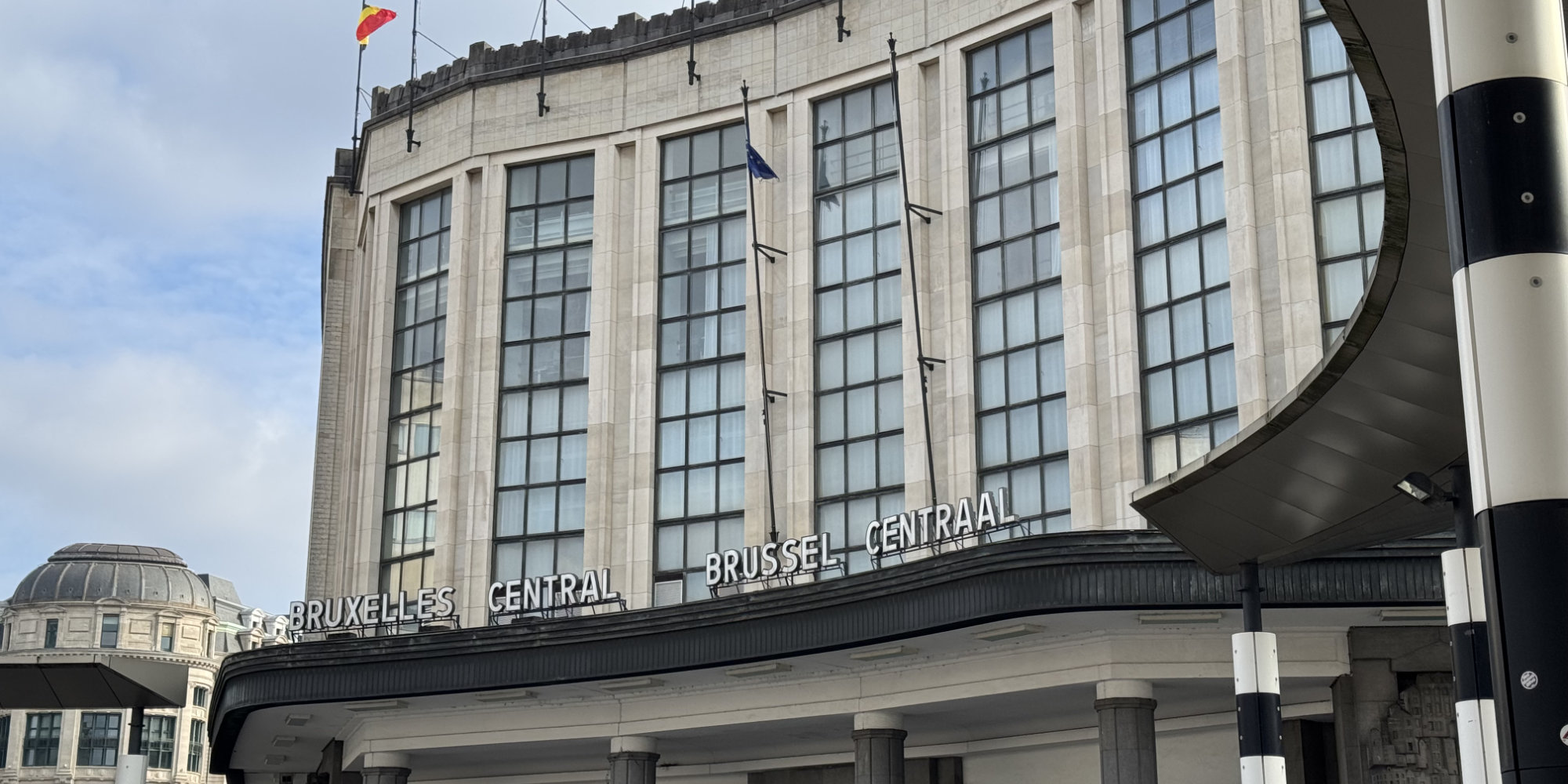
Bruxelles-Central is almost the opposite of Antwerp. The station is located in one of the most central places in Belgium – and yet from the outside it appears surprisingly inconspicuous.

It does not stand independently on a large station square but is embedded in a dense network of streets and urban blocks. The Grand Place, Mont des Arts, and the Cathedral of St. Michael and St. Gudula are only a few steps away. It is hard to imagine a better location for a railway station in a European capital.

Architecture enthusiasts should nevertheless take a closer look, because the building is associated with one of Belgium’s most important architects: Victor Horta. He was commissioned to design the station as early as 1910 and developed various plans over the following years. Construction did not begin until 1937. Maxime Brunfaut later continued the work, and Bruxelles-Central opened in 1952. The station is therefore one of Horta’s major late projects, although stylistically it has little in common with his famous Art Nouveau buildings.

Even more interesting is the history of the railway beneath it. Brussels’ large stations to the north and south of the city were originally termini. There was no efficient cross-city rail link connecting the two. Work on what is now the North-South Connection began in 1911, came to a halt during the First World War, resumed in 1936, and was finally completed in 1952.

The project was one of the great infrastructure schemes of 20th-century and reshaped parts of the urban fabric along the eastern edge of the historic center. What matters most, however, is the result: trains can now cross the capital from north to south. International services arriving from different directions can continue through Brussels rather than terminating there.

Surprisingly little of this importance can be felt on the platforms. Underground, Bruxelles-Central is decidedly functional. The platforms are well maintained but architecturally hardly spectacular; dark wall surfaces and the tunnel-like character dominate the atmosphere.

That contrast is what makes the station interesting. Above, you stand in the middle of Brussels’ historic center. Below, one of the country’s most important railway corridors runs beneath your feet. It is a major station that hides almost entirely under the city.

Liège-Guillemins – Calatrava’s grand Railway Sculpture
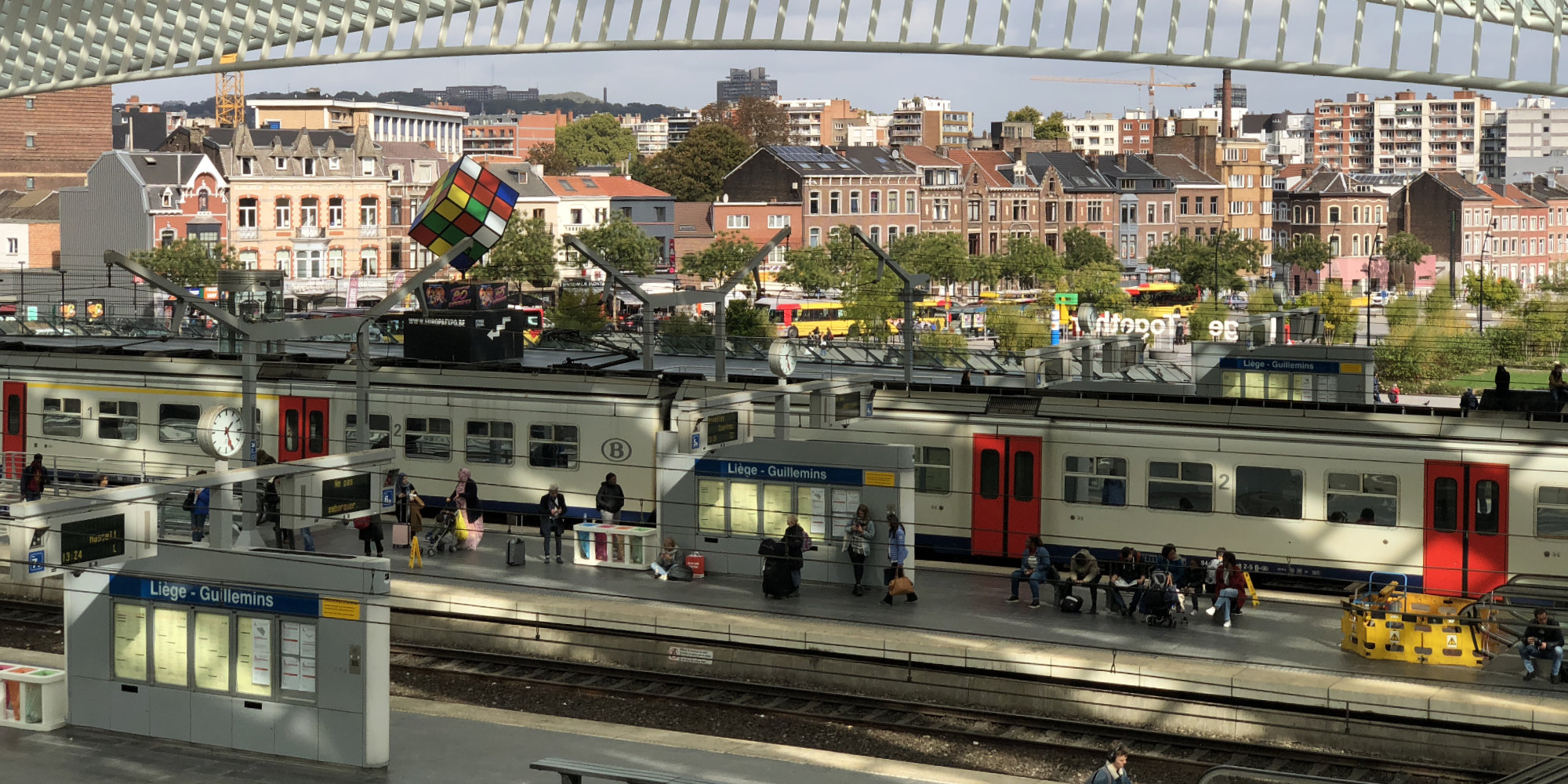
Liège-Guillemins does not hide. Even as the train approaches the station, it becomes clear that the architecture itself is intended to be an event.

The present station was designed by Santiago Calatrava. The Spanish-Swiss architect and engineer was commissioned to create the new station in the 1990s, and it opened in 2009. It replaced a functionalist post-war building and was also intended to provide Liège with a station worthy of the European high-speed rail network.

Calatrava abandoned the traditional idea of a station with a clearly separate entrance building in front of the tracks. Instead, the entire complex is unified by a vast structure of white concrete, steel, and glass. The sweeping roof rises above the platforms and appears to stretch across almost the entire station. Depending on the angle, the recurring white ribs and arches evoke a skeleton, a wing, or an enormous modern vault.

The complex nevertheless has a clearly defined city-facing side. A spacious esplanade opens up in front of the station, giving the building the distance it needs. It is from here, in particular, that the architecture makes its strongest impression.

Inside, Liège-Guillemins is a station in which structure and architecture are almost impossible to separate. There is no historic ticket hall leading into a separate train shed. The structure above the tracks is itself the station’s great spatial experience.

Since 2025, the station has also been connected to the tram network. Liège’s new tram line serves Guillemins and links the station with important parts of the city center and other neighborhoods. This has further strengthened the station’s role as a public transport hub.

Liège-Guillemins is divisive. Anyone who loves historic stations with dark natural stone, wood, and iron may not immediately feel at home here. But as a modern railway station, the complex is uncompromising. Calatrava did not simply place a roof over the tracks, he turned the entire station into a monumental sculpture visible from afar.

Mons – the new Station above the Tracks
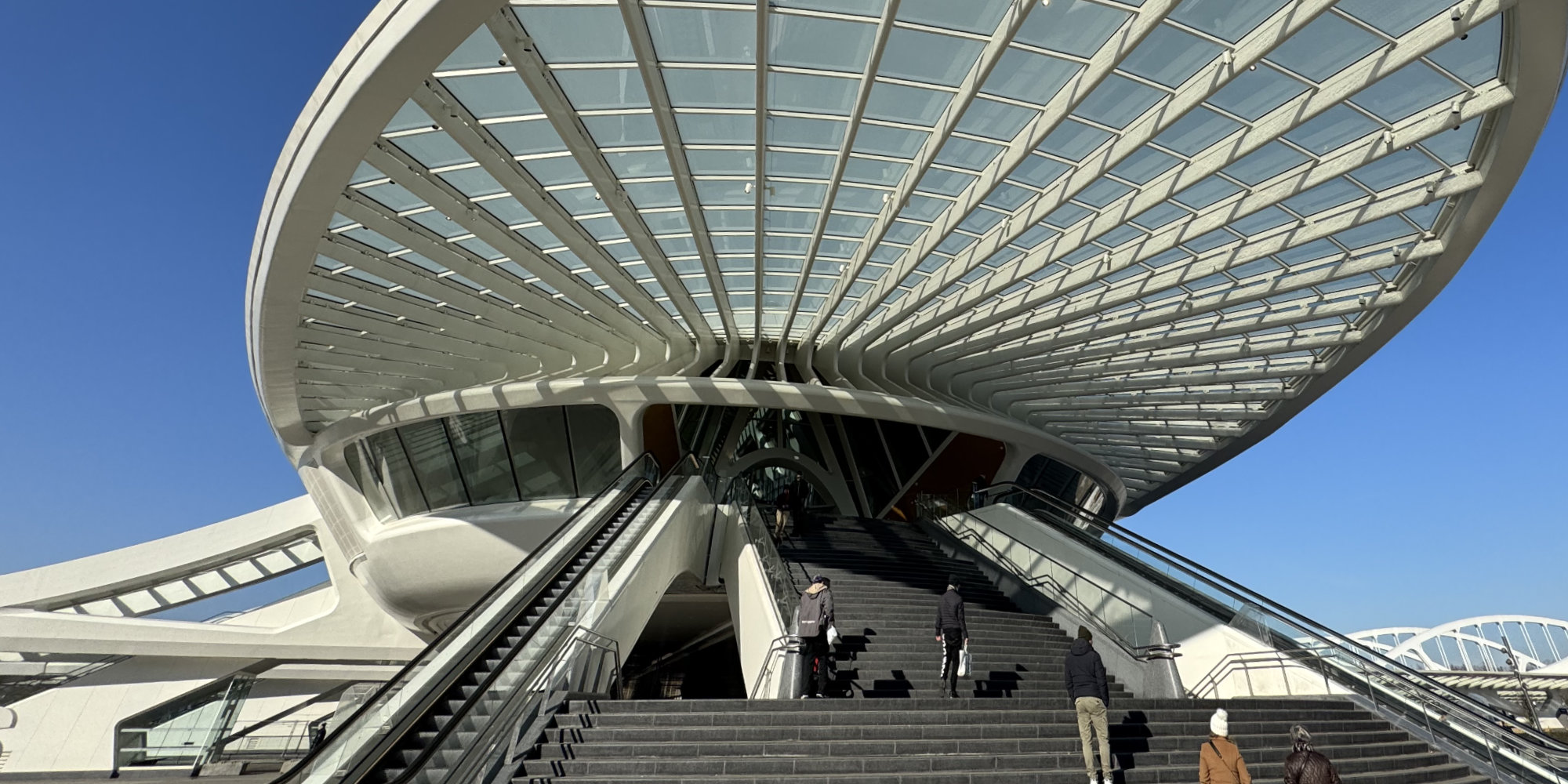
Mons also unmistakably bears Calatrava’s signature. Even so, the station is not a repetition of Liège-Guillemins.

Whereas in Liège the large roof over the platforms dominates the experience, the spatial center of Mons lies above the tracks. A large covered passage crosses the railway lines. From there, passengers descend to the platforms, while the structure simultaneously connects the two sides of the station. On one side lies Place Léopold toward the historic center; on the other are Place des Congrès and the Grands-Prés area.

This urban connection should not be exaggerated, however. The two sides of the station are by no means equally relevant to visitors. For tourists, the side facing the historic center of Mons is clearly the interesting one. The bridge structure is remarkable primarily because Calatrava has organized the station itself above the railway tracks.

The new station opened for regular service in December 2024. This makes Mons by far the newest station in this selection. Its development stretched over many years, and the finished building is correspondingly large in scale.

Typical Calatrava motifs can be seen everywhere: white ribs, large glass surfaces, sweeping curves, and a structure that feels both technical and almost organic. The covered passage is not simply a walkway but the station’s central public space.

Mons becomes particularly interesting when compared with Liège. Both stations were designed by the same architect and unmistakably speak the same formal language. Yet the experience of them is completely different. In Liège, you stand beneath a vast open hall. In Mons, you first move above the railway and look down.

Having two Calatrava stations in the top five almost becomes a theme in itself. They show how differently the same architect can respond to two railway sites.

Oostende – Terminus by the Sea
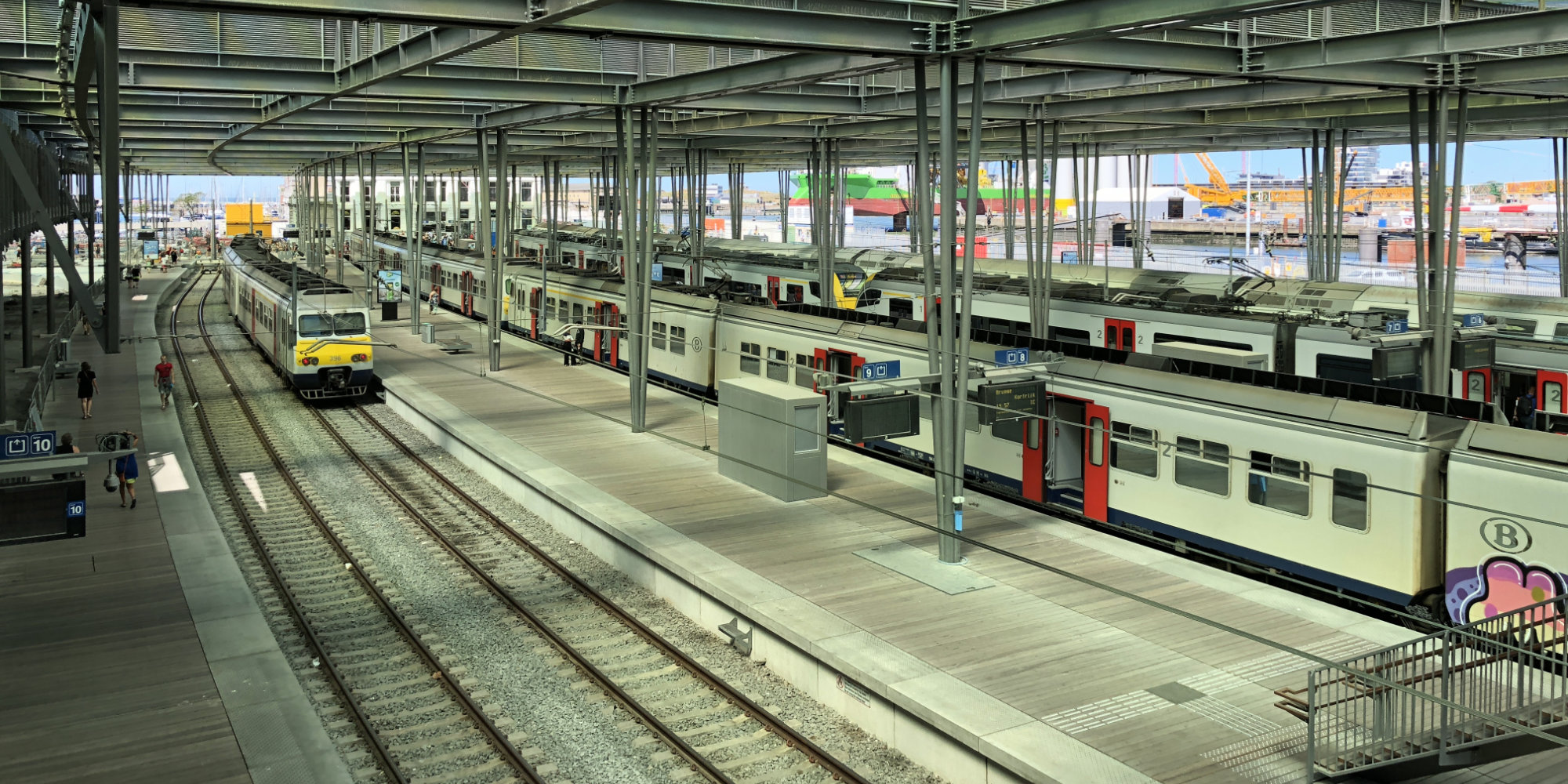
Oostende appears on this list less because of a single spectacular architectural feature than because of the overall impression. Here, the railway station, harbour, coastal city, and local public transport come together in an unusually harmonious way.

The historic station building was constructed between 1907 and 1913 to designs by Belgian State Railways architects Otten and Seulen. The former Oostende-Kaai station was deliberately designed as both a maritime station and a terminus. Rail travel was closely linked to shipping across the English Channel here – Oostende was one of Belgium’s major gateways to Great Britain for decades.

Today, the historic complex gains much of its special appeal from its modern canopy. The large roof by Dietmar Feichtinger Architectes covers not only parts of the railway station but also integrates the coastal tram and other transport functions into a shared space. Translucent polycarbonate panels supported by a steel structure allow plenty of light to enter, while their varying colors create a surprisingly colorful atmosphere depending on the weather and time of day.

The connection to the Kusttram is particularly convenient. Belgium’s coastal tram stops directly at Oostende station, and transferring between train and tram takes place practically within the same transport complex. Anyone continuing along the coast can step off the train and almost immediately board a tram.

For me, however, the real highlight comes when leaving the station. An unusually spacious urban setting opens up in front of you. On one side are the marina, water, and sailing boats. Nearby rises the neo-Gothic Sint-Petrus-en-Pauluskerk, followed by harbour basins and the maritime world of Oostende. The sea itself is still a short walk away, but the arrival already feels unmistakably coastal.

Oostende may therefore be the most atmospheric station on this list. You do not simply arrive in a city. You arrive on the Belgian coast – and the station, tram, and harbour tell you that within the first few minutes.

Gent-Sint-Pieters – the Candidate that just missed out

Gent-Sint-Pieters would be my clear number six. The historic station building was designed by Louis Cloquet and constructed in the run-up to the 1913 Ghent World’s Fair. Cloquet conceived the station as a prestigious gateway to the city, and that is exactly how it still feels today.

The interior is particularly worth seeing. In the hall, sgraffiti depicting Belgian cities recall the station’s original role in presenting international visitors to the World’s Fair with an impressive image of the country. The distinctive tower and long historic façade also give Gent-Sint-Pieters a strong and recognizable identity.

The platform side, however, does not entirely live up to this grand presentation. This illustrates a phenomenon encountered more than once at Belgian railway stations: the historic station building can be exceptionally ornate, while the actual platforms remain far more functional.

Nevertheless, Gent-Sint-Pieters is without doubt one of Belgium’s most important stations from both an architectural and historical perspective – and the first candidate that has to be left out of a top five.

Namur – historic Station and Buses on the Roof

Namur should not be reduced to its unusual bus station. The historic station building on Place de la Station is already worth seeing in its own right.

The present building was designed by A. P. J. Lambeau and inaugurated in 1864. It is a monumental station in a French-influenced Neoclassical style. With its long symmetrical façade and pale stone, it forms an exceptionally representative backdrop to the station square.

The real curiosity, however, lies behind and above it. Since 2023, the central bus station has been located on an upper level built over the railway tracks. Buses reach it via dedicated access roads, while direct routes connect it with both the railway station and the city.

Namur thus combines a historic 19th-century railway station with a distinctly modern approach to integrating different modes of transport in a densely built-up city center. Rail passengers, buses, and pedestrians are organized across different levels.

The station is also an excellent starting point for a trip: the Walloon capital, with its old town, the Sambre and Meuse rivers, and its citadel, begins practically right outside the door.

Leuven – a successful Total Work of Art

In Leuven, it is less a single spectacular detail than the interplay of different eras that makes the station interesting.

The historic station building by Henri Fouquet dates from the late 19th century and closes off the eastern side of Martelarenplein. Behind it, the station was later extensively modernized. Today’s platform canopy by Philippe Samyn and Partners introduces a contemporary accent with its sweeping steel structures without visually overshadowing the historic station.

The canopy should not be compared with the great train halls of Antwerp or Liège. Its strength lies instead in how successfully it has been integrated into the renewed station environment. The historic station building, modern platform area, forecourt, and connection to Kessel-Lo together form an exceptionally coherent complex.

The connection to the city is particularly attractive. From Martelarenplein, the perfectly straight Bondgenotenlaan leads directly toward the historic center and the Grote Markt. This axis was deliberately designed so that the station appears as the visual endpoint when viewed from the city center.

For travelers, it is ideal: leave the station, cross the square, and continue almost straight toward the town hall.

Tournai – a monumental Introduction to a magnificent City

Tournai may not be a station worth crossing Belgium for on its own. In combination with the city, however, it is an exceptionally strong bonus.

The station building was constructed to designs by Henri Beyaert in the Neo-Renaissance style and inaugurated in 1879 in the presence of King Leopold II. Beyaert was one of Belgium’s most important architects of the 19th century, and the prestigious façade makes clear how significant a railway station could be as the gateway to a city.

On the track side, the complex becomes much more restrained. The station draws its character above all from its city-facing façade and from the impression it creates on arrival.

That suits Tournai perfectly. Beyond the station lies one of Wallonia’s most interesting historic cities, with the Cathedral of Notre-Dame, the Belfry, and the Grand Place.

Tournai is therefore a typical bonus station: the station itself is worth seeing, but above all it makes you want to step outside and explore the city beyond it.

Schaerbeek / Schaarbeek – Railway Station and Railway Museum

Schaerbeek in Brussels is the logical conclusion to this list – especially for railway enthusiasts.

The present historic ensemble began in 1887 with a stone station building designed by Franz Seulen. The building is in the Flemish Neo-Renaissance style and was later expanded. With its gables, small towers, contrasting brick and pale stone, and rich decoration, it looks almost like a miniature railway castle.

The platforms themselves, by contrast, are considerably simpler. Anyone getting off here might wonder why Schaerbeek appears on this list at all.

The answer lies in the historic station and directly beside it: since 2015, it has been part of Train World, Belgium’s railway museum. Historic locomotives, carriages, technology, design, and the history of the Belgian railway network are presented here in an authentic railway setting.

Schaerbeek is therefore less a classic tourist destination because of the station alone than a recommendation for anyone who wants to delve even deeper into Belgian railway history after reading this article. It is hard to imagine a more suitable place for doing so.
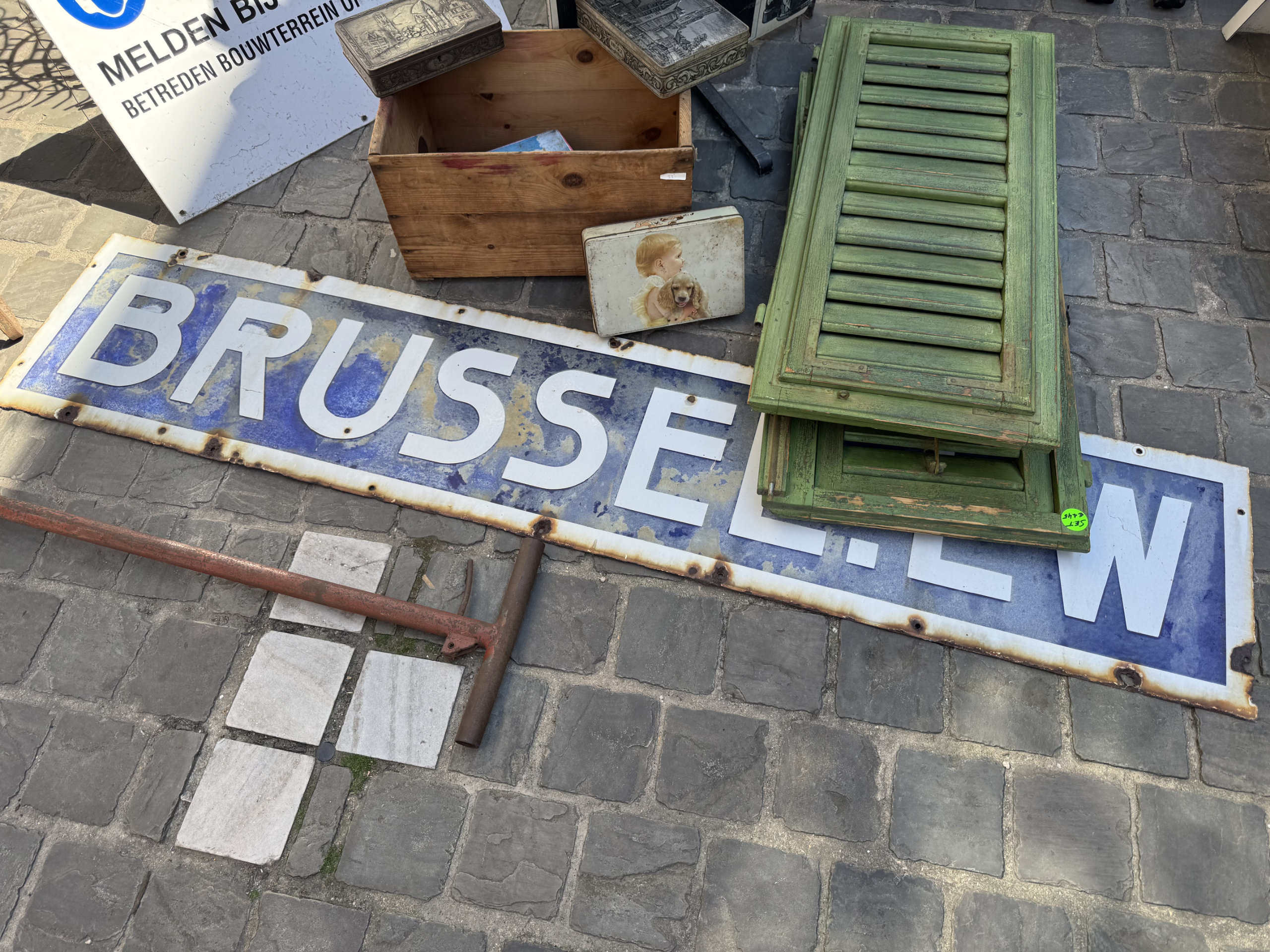
In Belgium, flea markets and antiques hold a cultural significance that goes far beyond mere nostalgia. They reflect a deeply rooted appreciation for history, craftsmanship, and everyday aesthetics. The country, whose towns and cities have often preserved their medieval character, has a long tradition of trade and a rich material and industrial culture. Within this context, a refined sensitivity to the objects of the past has evolved – to furniture, household items, and artisanal works that have endured through time and tell fragments of lived history.

Please make sure to check online before your visit to confirm whether the flea market is taking place. This list has been compiled with great care, but dates may change, and even regularly scheduled markets may be cancelled, for example due to other events or public holidays. Opening hours may also vary, so it’s best to arrive early. The number of stalls can fluctuate significantly, depending on factors such as weather or holidays.

Below you’ll find the dates for particularly well-known and highly recommended antique and flea markets, which offer a wide variety of goods but no new items. You can find my personal favourites, details and tips here.

Every day

Brussels

TOP Marché aux puces du Jeu de Balle
Location: Place du Jeu de Balle
Time: 9 AM to 2 PM
Stands: 350

Sundays (weekly)

Antwerp

Antiek- & Brocantemarkt
Location: Sint-Jansvliet
Time: 9 AM to 5 PM
Stands: 100

Brussels

Sablon Antiques Market
Location: Grand Sablon
Time: 9 AM to 3 PM
Stands: 25

Ghent

Bij Sint-Jacobs
Location: Bij Sint-Jacobs
Time: 8 AM to 2 PM
Stands: 100

Herve

TOP Brocante du Marché Couvert de Battice
Location: Rue des Forges les Eaux
Time: 7 AM to 1 PM
Stands: 200

Raeren

Megahalle Hauset
Location: Aachener Straße
Time: 8 AM to 3 PM
Stands: 75

Spa

TOP Brocante de Spa
Location: Place Royale
Time: 7 AM to 2 PM
Stands: 100

Tongeren

TOP Antiekmarkt
Location: Leopoldwal
Time: 7 AM to 1 PM
Stands: 350

Tournai

Brocante des Bastions
Location: Boulevard Walter de Marvis
Time: 4 AM to 1 PM
Stands: 100

Waterloo

Brocante du Lion
Location: Drève Richelle
Time: 7 AM to 1 PM
Stands: 300

from March to November

Bruges

op de Dijver
Location: Dijver
Time: 10 AM to 6 PM
Stands: 50

from March to October

Namur

Brocante de Jambes
Location: Quai de Meuse
Time: 7 AM to 1 PM
Stands: 100

Saturdays (weekly)

Brussels

Sablon Antiques Market
Location: Grand Sablon
Time: 9 AM to 3 PM
Stands: 25

Ghent

Bij Sint-Jacobs
Location: Bij Sint-Jacobs
Time: 8 AM to 2 PM
Stands: 100

Raeren

Megahalle Hauset
Location: Aachener Straße
Time: 10 AM to 3 PM
Stands: 75

from March to November

Bruges

op de Dijver
Location: Dijver
Time: 10 AM to 6 PM
Stands: 50

Fridays (weekly)

Antwerp

Vrijdagmarkt
Location: Vrijdagmarkt
Time: 9 AM to 1 PM
Stands: 50

Ghent

Bij Sint-Jacobs
Location: Bij Sint-Jacobs
Time: 8 AM to 2 PM
Stands: 100

Liège

TOP Brocante Saint-Pholien
Location: Boulevard de la Constitution
Time: 7 AM to 1 PM
Stands: 150

from June to September

Bruges

op de Dijver
Location: Dijver
Time: 10 AM to 6 PM
Stands: 50

Wednesdays (weekly)

Durbuy

Brocante Durbuy
Location: Parc de Julienas
Time: 7 AM to 1 PM
Stands: 100

Kortrijk

Eurometropolis Brocante Kortrijk
Location: Engelse Wandeling
Time: 7 AM to 1 PM
Stands: 100

Sundays (monthly)

first Sunday of every month from March to October

Arlon

TOP Marché aux Puces du Vieil Arlon
Location: Grand Place
Time: 7 AM to 1 PM
Stands: 250

Various dates

Antwerp

Brocantwerpen
Location: Grote Markt
Time: 10 AM to 6 PM
Stands: 100
Dates

Brussels

TOP Voddemet Brussels Flea Market
Location: Rue Picard
Time: 9:30 AM to 5:30 PM
Stands: 100
Dates

first Sunday of July and August, fourth Sunday of September

Bruges

TOP Zandfeesten
Location: ’t Zand
Time: 6 AM to 6 PM
Stands: 250
Dates

three times a year over three days

Ciney

TOP Ciney Puces
Location: Rue du Marché Couvert
Time: 10 AM to 6 PM
Stands: 500
Dates

Annually

June: Sunday

Stavelot

Grande Brocante de l’été
Location: Place Saint-Remacle
Time: 6 AM to 6 PM
Stands: 400
Dates

August: Friday

St. Vith

TOP Großer Kunst- und Trödelmarkt
Location: Hauptstraße
Time: 1 PM to 8 PM
Stands: 1,200
Dates

August: Saturday and Sunday

Namur

TOP Brocante de Temploux
Location: Rue Arsène Grosjean
Time: almost all day
Stands: 1,200
Dates

September: Sunday

Kemmel

Rommel- en Antiekmarkt
Location: Kemmelstraat
Time: 6 AM to 6 PM
Stands: 1,000
Dates

The Meuse is one of Western Europe’s great rivers. It rises in France near the village of Pouilly-en-Bassigny and winds its way for more than 900 kilometers through France, Belgium, and the Netherlands before flowing into the sea at Rotterdam. In Belgium, the river cuts through the heart of Wallonia, shaping the landscape, the cities, and the history of the region. Its character is remarkably diverse.

North Meuse

A striking feature is the contrast between the two main Belgian sections of the river, north and south of Namur. To the north, between Namur and the Dutch border, the Meuse runs through a densely populated and historically heavily industrialized area. The Liège region, roughly from Huy to Visé, developed into a center of the steel and coal industry in the 19th century. Although heavy industry has largely disappeared, its legacy still defines the region today. Travelers here sense the tension between the river as a natural space and the industrial cities that played a key role in Belgium’s economic history.

South Meuse

South of Namur, the Meuse takes on a completely different appearance as it flows upstream toward the French border. Here the valley reveals itself as one of Belgium’s most beautiful holiday regions. Steep cliffs, dense forests, and small villages alternate with castles and old monasteries.

Namur itself, where the Sambre flows into the Meuse, is the capital of Wallonia, dominated by its imposing citadel. The very picturesque city with its old town, beautiful churches and riverbanks serves as a lively starting point for exploring the valley further.

At the southern end lies Dinant, one of the best-known towns on the Meuse and a true postcard image of Belgium. Wedged between sheer cliffs and the river, it looks almost like a stage set. Dinant is famous for its cathedral with the distinctive onion-shaped tower, for the citadel above, and not least as the birthplace of Adolphe Sax, the inventor of the saxophone. From here, the valley can be explored both on foot and by water, as hiking and boat tours are especially popular in this region.

Between Namur and Dinant, smaller villages offer a quieter impression of the Meuse. Here, the focus is less on landmarks and more on the sense of a landscape deeply interwoven with life along the river. Closer to the French border, the valley becomes lonelier and wilder before the Meuse finally leaves Belgium near Givet. The stretch that follows, as far as Charleville-Mézières in France, is also part of the Ardennes natural region and is considered highly scenic, though it remains little developed for tourism.

Anyone who follows the Meuse over a longer distance experiences a journey from industrial cityscapes to almost untouched river valleys – a panorama that powerfully reflects the diversity of Belgium.

Large countries are characterized by their diverse landscapes and cities with distinct personalities. Belgium, however, is small: driving from north to south (Antwerp to Arlon) takes about 2.75 hours, while crossing from east to west (Eupen to Ostend) takes roughly 2.5 hours.

Despite its compact size of 30,000 square kilometers, Belgium offers an extraordinary variety: from fine sandy beaches along the North Sea coast, through the flat but water-rich region of Flanders, to the rolling hills of Wallonia, which are carved by deep river valleys.

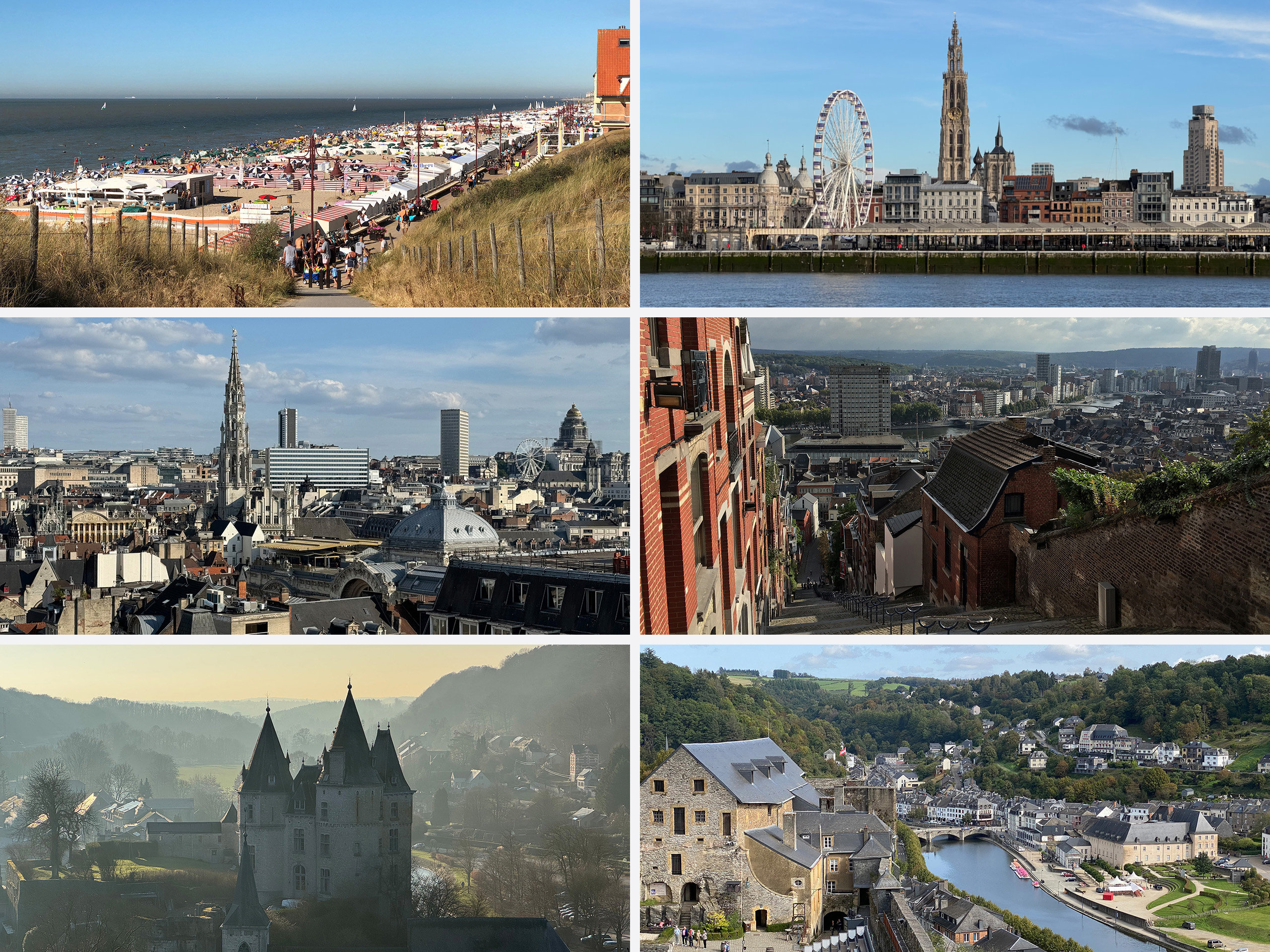
Belgium has it all: vibrant metropolises like Brussels and Antwerp, museum-like art cities such as Bruges and Ghent, different types of coastal towns like Ostend and De Haan, thrilling industrial cities like Liège and Charleroi, and picturesque fortress towns like Dinant and Bouillon.

Of course, the diversity of Belgium is largely shaped by its two main regions: Flanders in the north and Wallonia in the south. Dutch (Belgian Dutch, which differs not only in the softer pronunciation) is spoken in Flanders, while French is the language in Wallonia. Near the German border, there is even a small German-speaking community, Ostbelgien (Eastern Belgium).

The appearance of Flanders and Wallonia is different, but with a few exceptions you can always recognise that you are in Belgium. Flanders does not look like the Netherlands, nor does Wallonia resemble France.

In fact, some neighboring cities in other countries exhibit Belgian influences, particularly Maastricht (Netherlands), Aachen (Germany), and Lille (France).

Now, let’s take a tour of seven cities. As a reference: driving through all seven city centers takes a total of 5 hours, covering a distance of 300 kilometers.

Ostend

With a population of 70,000, Ostend is the largest Belgian coastal city and serves as a major transport hub, connecting the main railway line (Cologne – Aachen -) Liège – Leuven – Brussels – Ghent – Bruges – Ostend with the coastal tramway. Despite its compact size, Ostend feels very metropolitan. In addition to its wide sandy beaches, the city offers a wealth of entertainment: excellent shopping, cozy cafés, outstanding restaurants, museums, a casino, and more. Tip: If Ostend feels too busy or built-up, take a 20-minute drive to the beautiful Belle Époque coastal town of De Haan.

Bruges

After a 30-minute drive, we reach Bruges. There’s little need to introduce this jewel of a city with 120,000 inhabitants: an absolutely perfect, living open-air museum with stunning churches, art treasures, picturesque squares, canals, and winding streets. While Bruges is very crowded in summer, it is very romantic in the other seasons.

Antwerp

After an 80-minute drive, we arrive in Antwerp (skipping over the must-see city of Ghent to keep this tour concise). Antwerp is a stunning Flemish metropolis of 530,000 residents, reknown for its huge port and its art and fashion scene. Lovers of culture, art, architecture, fashion and shopping will be delighted with what this city has to offer.

Brussels

An hour later, we reach Brussels, the bilingual heart of Belgium – an enclave within Flanders, close to the Walloon border. With a population of 1.2 million, Brussels is a metropolis that feels even larger and more urban due to its capital status. It boasts grand historical buildings, large churches, colossal palaces, royal museums, an awe-inspiring triumphal arch, the Atomium, Art Nouveau neighborhoods, and much more – everything a proud capital should have. However, Brussels is also affected by the decline seen in many European cities.

Charleroi

Shortly after leaving Brussels, we enter Wallonia. An hour later, we arrive in Charleroi, the largest city in Wallonia with 200,000 residents. Once a thriving industrial hub, Charleroi is not your typical tourist destination – it is, in most areas, run-down and even considered ugly, but that’s precisely what makes it famous. It attracts adventurous visitors interested in industrial history, urban art, and urban exploration.

Namur

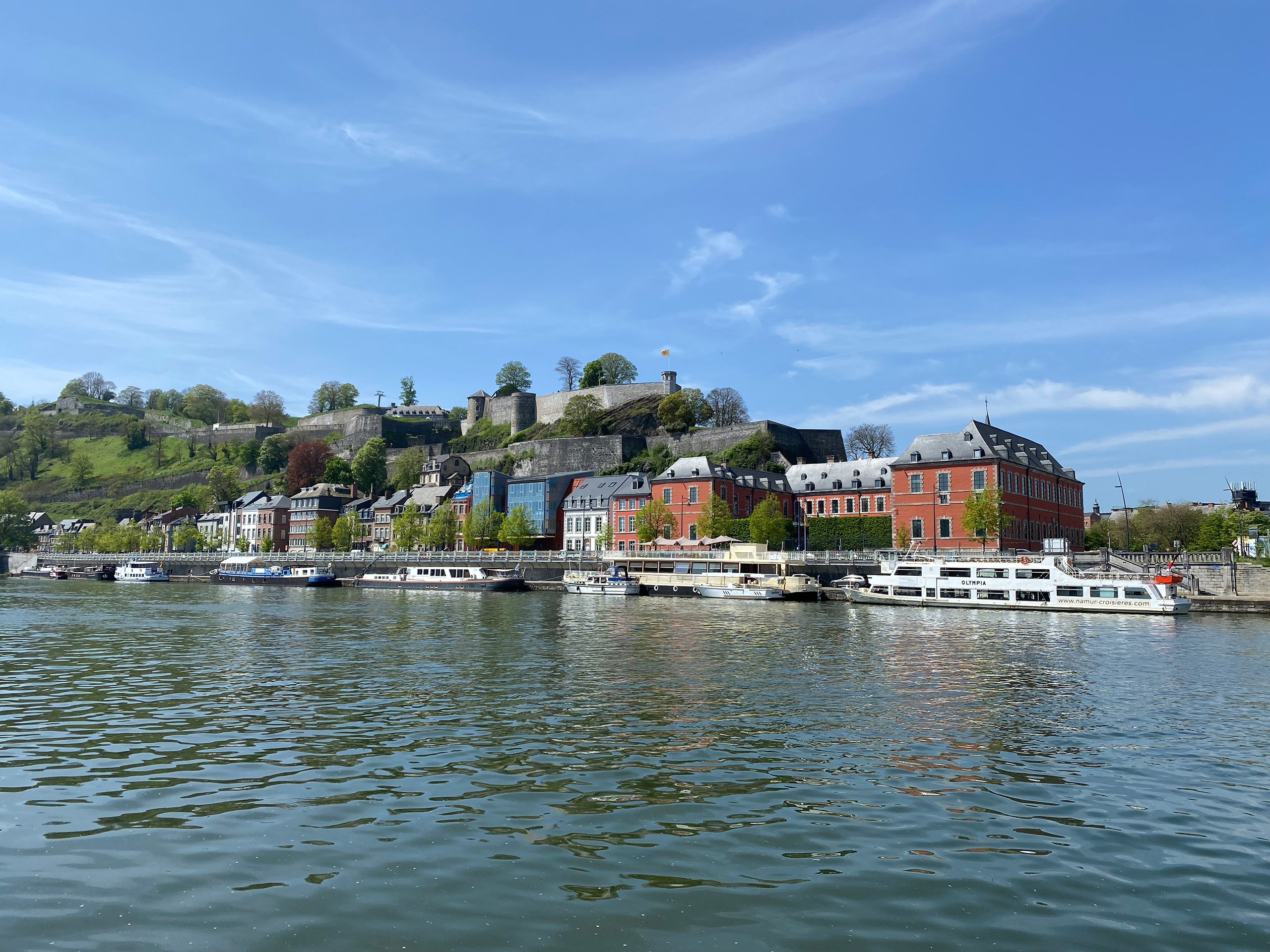
Thirty minutes later, we find ourselves in a completely different world: the elegant Walloon capital of Namur, home to 110,000 people. Located at the confluence of the Meuse and Sambre rivers, Namur features a large fortress atop a hill, accessible by foot, cable car, or car. From there, visitors can enjoy beautiful views of the rivers, the historic city center, and the Meuse Valley. The city itself is filled with charming squares, inviting cafés, excellent restaurants, and stylish boutiques. It has a distinct southern European flair.

Dinant

Continuing through the lovely Meuse Valley, passing green mountains and fascinating rock formations, we reach our final destination: Dinant. This small town of 13,000 people is the postcard image of Wallonia: a river, a bridge, colorful houses, a grand church, and a massive rock formation crowned with a citadel. Tip: For those interested, a 20-minute drive along the Meuse River leads into France.

The Belgian Ardennes, located in the southeast of Belgium, is a region full of charm, history, and adventure. This hilly to mountainous landscape, with dense forests, idyllic river valleys, and picturesque towns, attracts nature lovers, history enthusiasts, and adventurers alike.

Interesting Places

Here is a selection of the most beautiful places that should not be missed on any trip:

Namur, the capital of Wallonia, lies picturesquely at the confluence of the Meuse and Sambre rivers. The Citadel of Namur, one of the largest fortresses in Europe, offers spectacular views and fascinating insights into the region’s history. The old town, with its narrow streets and historic buildings, invites visitors to stroll and explore.

Dinant, located directly on the Meuse, is famous for its majestic Citadel and the striking Church of Notre-Dame, nestled against the rock face. Dinant is also the birthplace of Adolphe Sax, the inventor of the saxophone. A boat trip on the Meuse offers unforgettable views of the city.

Durbuy, known as the “smallest city in the world,” charms visitors with cobblestone streets, cozy restaurants and cafes, lovely shops, and a romantic atmosphere. It is an ideal spot for a relaxing stroll, enjoying regional specialties, or engaging in outdoor activities.

The renowned city of Spa attracts visitors with its thermal springs and a touch of luxury. The city is also the namesake for spas worldwide. Nearby lies the famous Formula 1 racing circuit.

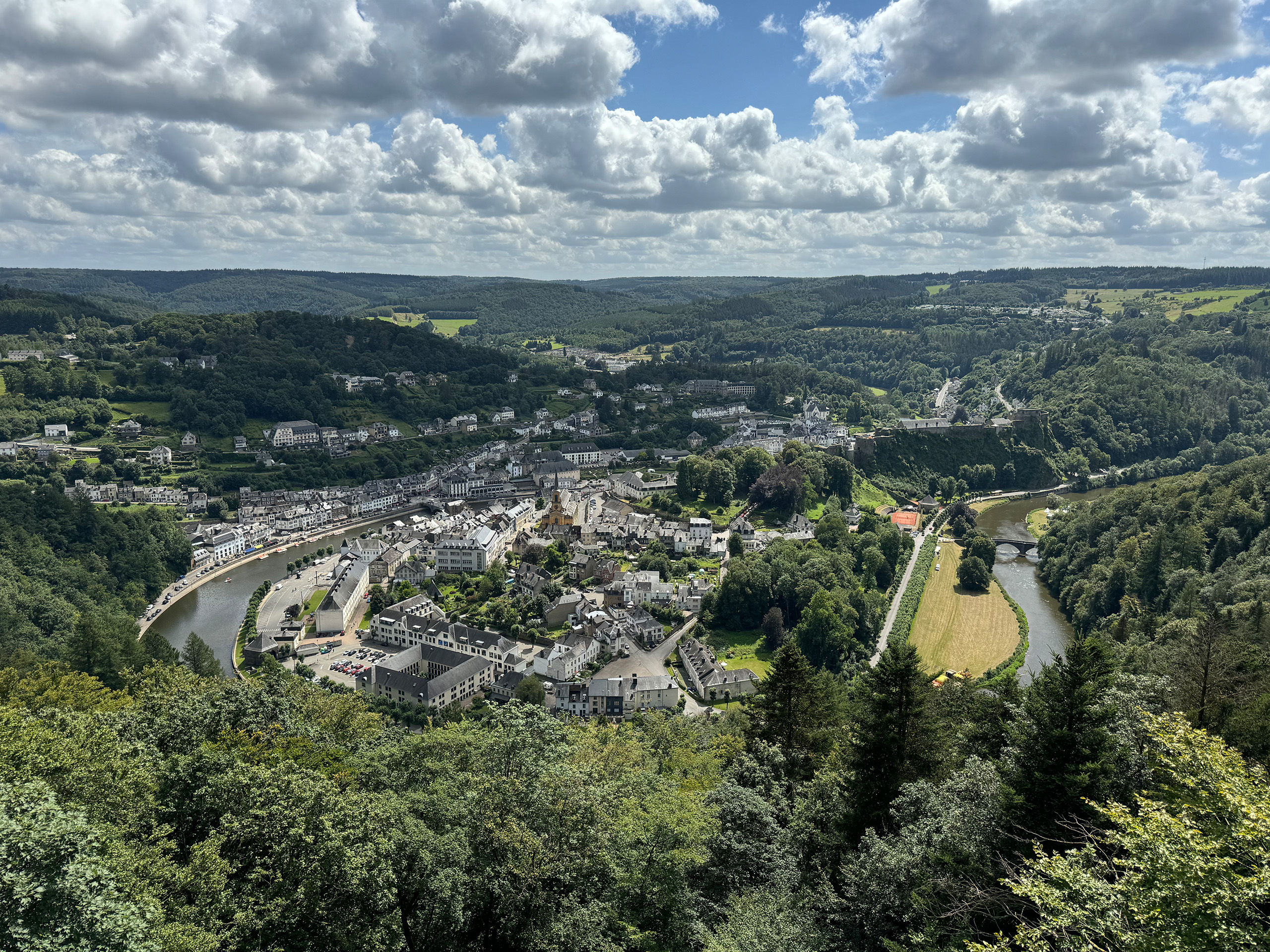
Bouillon, located near the French border, impresses with its castle perched above the Semois River. This medieval fortress tells the story of the Crusader Godfrey of Bouillon.

La Roche-en-Ardenne enchants with its medieval castle ruins and its idyllic setting along the Ourthe River.

These small towns combine culture, history, and nature – making the Ardennes an unforgettable travel destination!

Nature and History

The nature of the Ardennes is equally impressive. Hikers and cyclists can enjoy a network of trails winding through dense forests and rolling hills. The High Fens-Eifel Nature Park is particularly popular, known for its unique moor landscapes and rare flora and fauna. Adventurers can kayak on the Ourthe and Lesse rivers or explore the spectacular Caves of Han, famous for their stalactite formations and an underground river.

For history buffs, the Ardennes is a fascinating destination as well. The region played a significant role in European history, especially during World War II. The Bastogne War Museum, located in the town of Bastogne, provides a poignant insight into the Battle of the Ardennes.

Whether you seek the tranquility of nature, explore historical sites, or crave outdoor adventures, the Belgian Ardennes offer something for you!

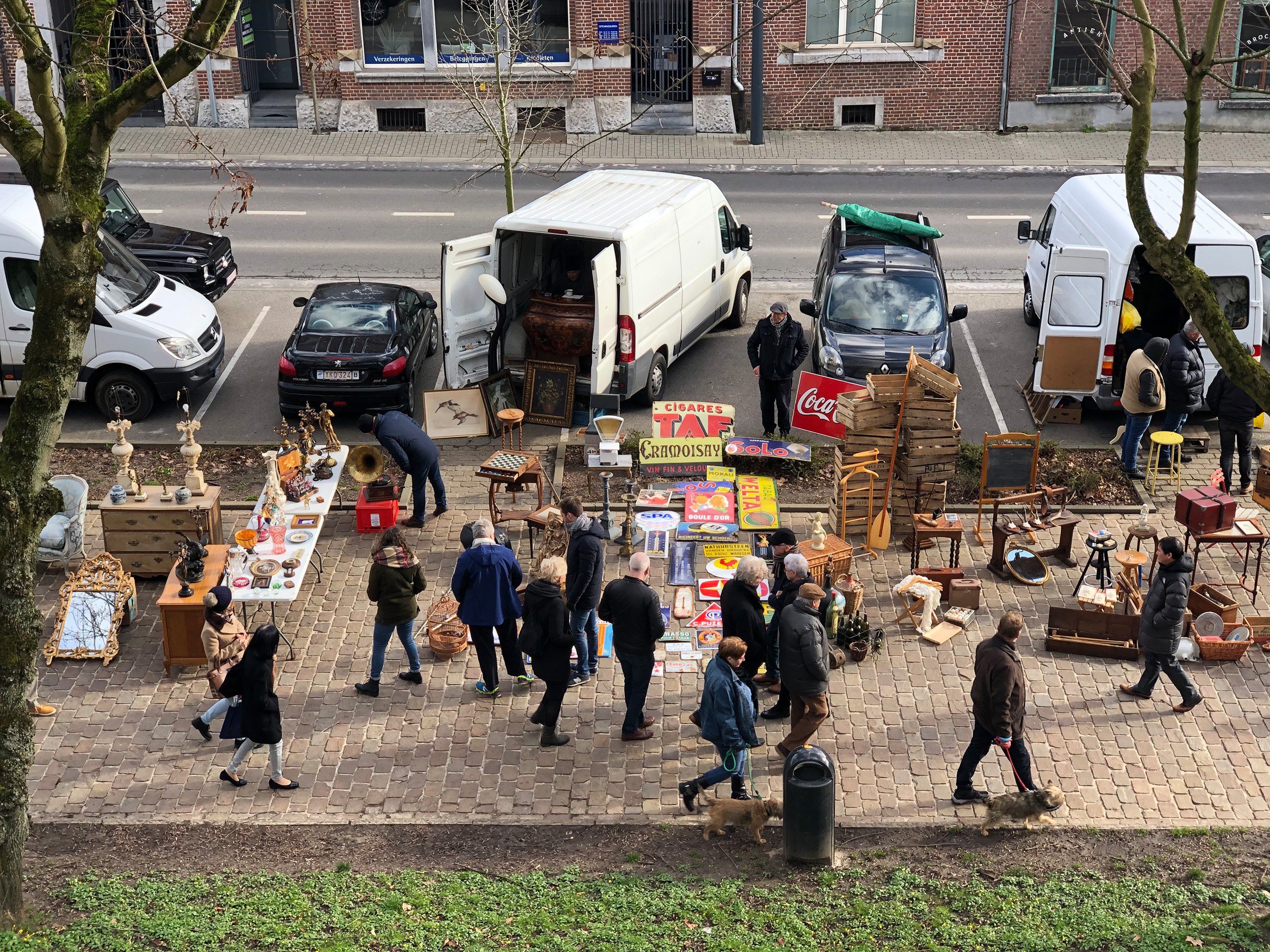
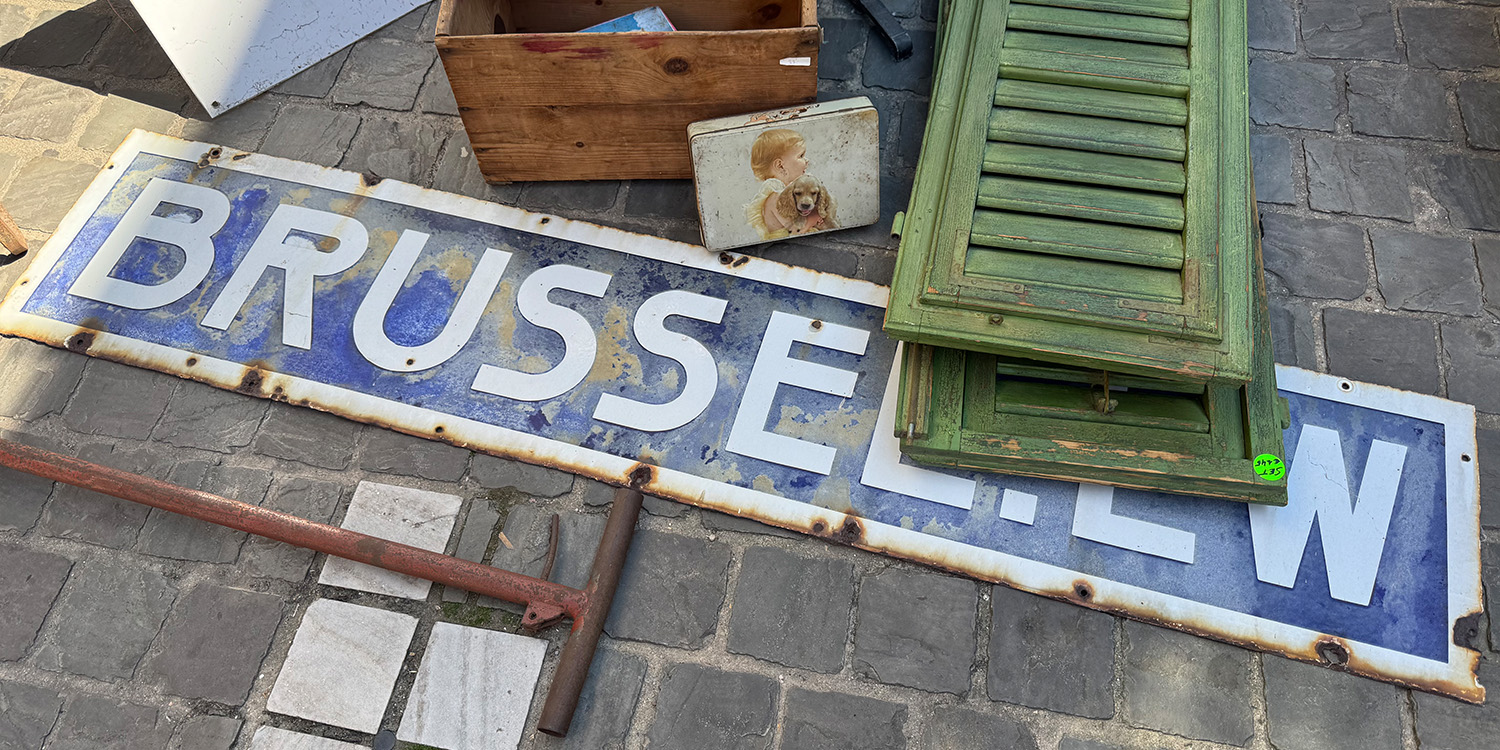
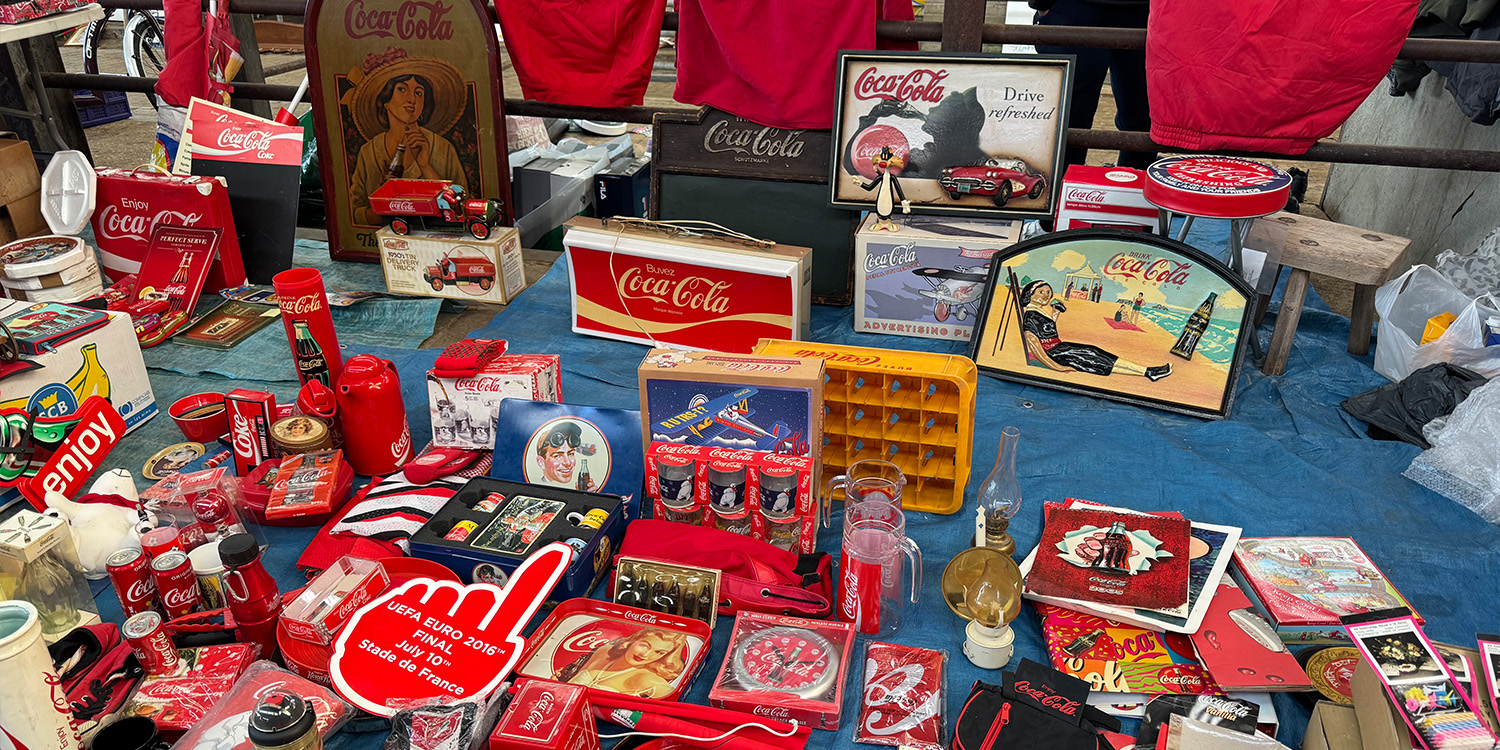
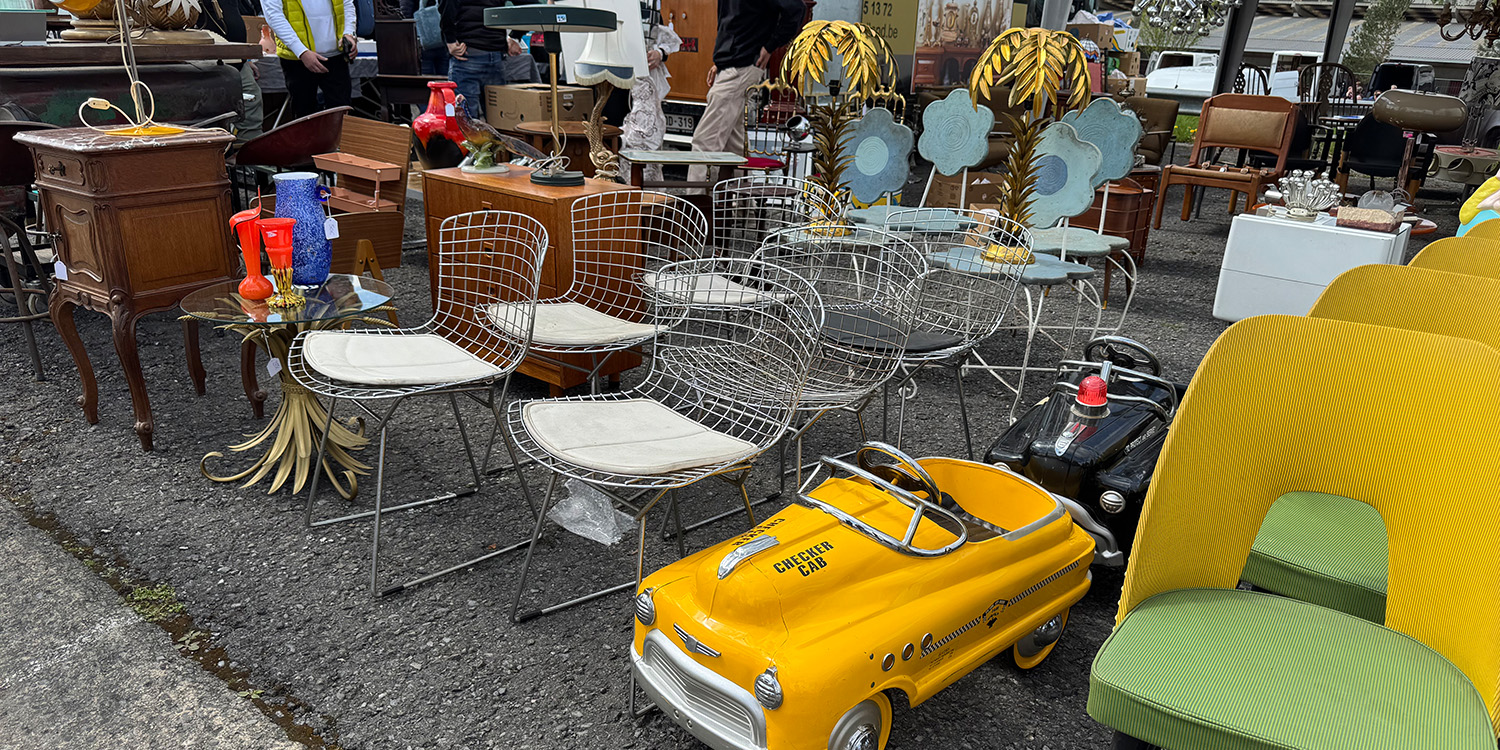
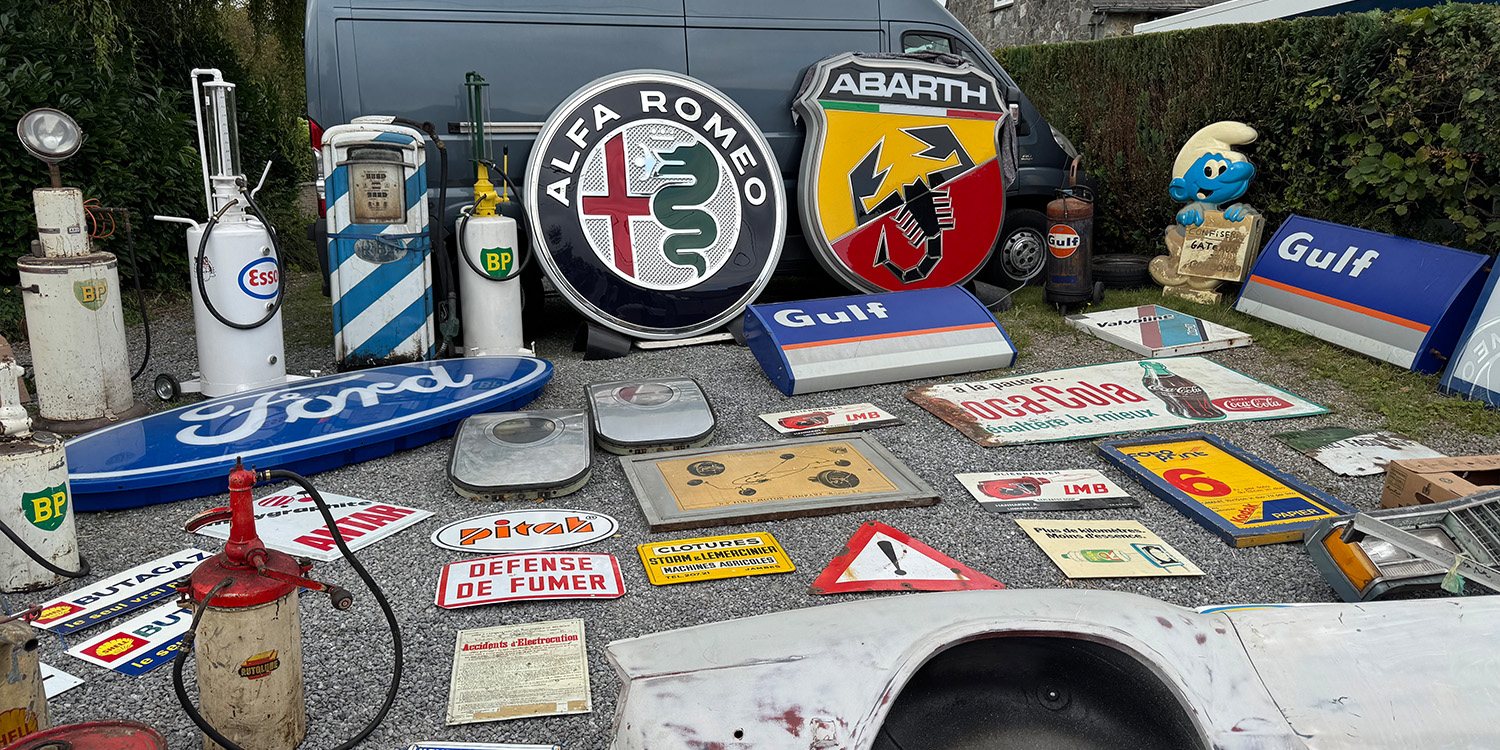
Belgium is a haven for lovers of flea markets. You can find just about everything imaginable, from the 18th century to the 1990s. At good, traditional flea markets, new items are not allowed, but there are plenty of unusual and rare things – that don’t have to be expensive. Markets are organised every weekend in countless locations. There is even a daily flea market in Brussels, while some others only take place once a year. Many visitors enjoy spending hours browsing through antiques, vintage clothing, books, records, furniture, and hidden treasures from different periods of history.

Here are my personal favourites:

Antiekmarkt Tongeren

every Sunday

Leopoldwal, Tongeren

The Antiques Market in Tongeren is the largest of its kind in the Benelux region. It takes place every Sunday from 7 AM to 1 PM, surrounding the Leopoldwal in the city center. Two large covered areas – the upper hall of the Julianus underground parking garage and the Eburons sports hall – provide additional shelter for the market.

You’ll find mostly classic antiques, furniture, collectibles, and curiosities. The market features around 350 stalls, 40 specialized antique shops, and charming cafés along the way.

Parking options are excellent: the Julianus underground parking garage (Clarissenstraat 41) is located right in the market area and is easily accessible.

Prices are generally moderate, which is why many antique dealers from neighboring countries shop here early in the morning.

Brocante du Marché Couvert de Battice

every Sunday

Rue des Forges les Eaux, Herve

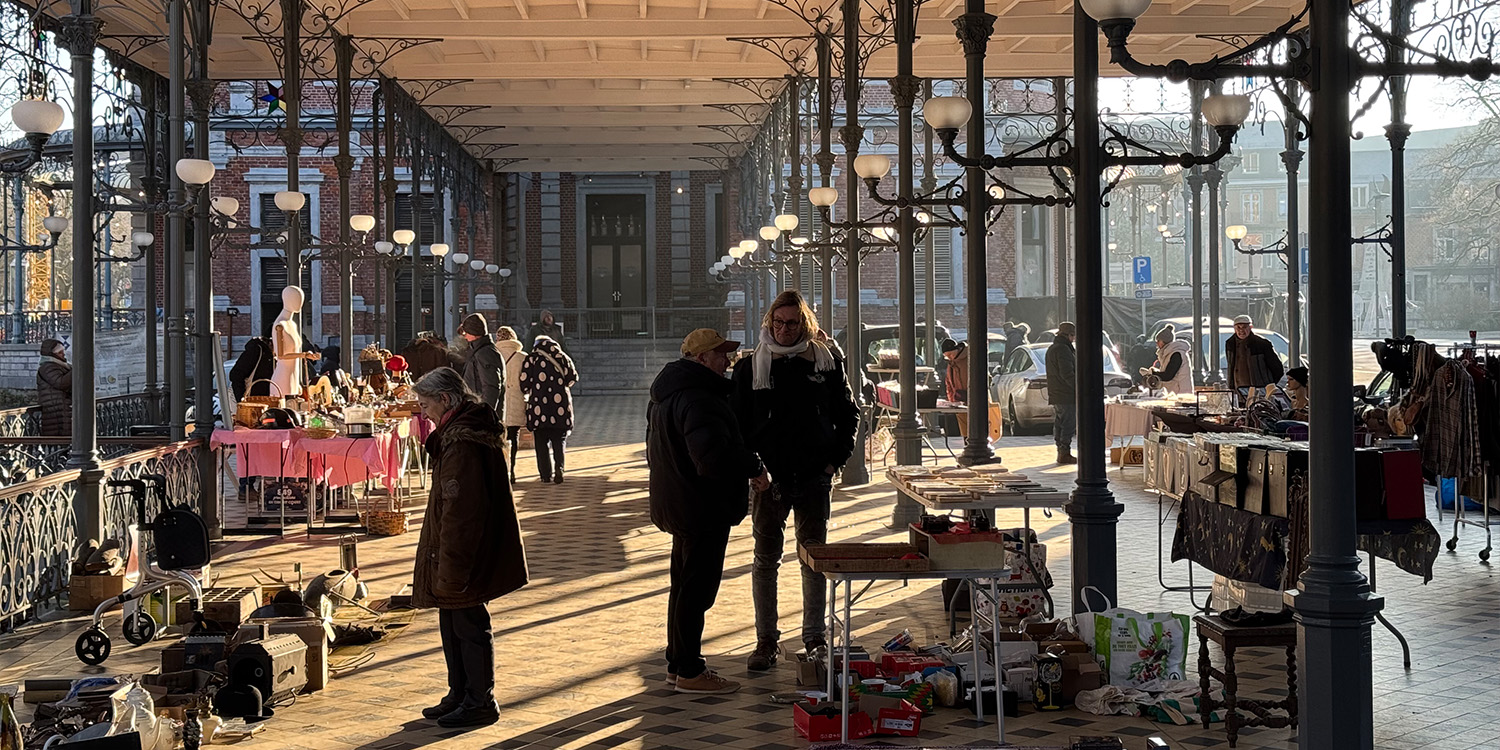
The flea market in Battice, a district of Herve, is held in a fully covered hall that is normally used for cattle trading. It takes place every Sunday from 7 AM to 1 PM, after a thorough cleaning.

A wide variety of items are sold here: knick-knacks, decorations, furniture, collectibles, and tools. It’s not uncommon to discover awesome unusual rarities among the 200 stalls.

There’s a large parking lot directly in front of the hall.

Prices are very low, and the atmosphere is rough but friendly.

Brocante de Spa

every Sunday

Place Royale, Spa

Traditionally held in a picturesque setting around the Galerie Léopold II in the center of Spa, this flea market has suffered due to the renovation of the gallery and the impact of COVID-19. Nevertheless, I include it here in the hope that it will soon regain its former size and charm.

The market takes place every Sunday from 7 AM to 2 PM. Items sold include second-hand goods and antiques. Parking can be challenging, prices are moderate.

Marché aux puces du Jeu de Balle, Brussels

every day

Place du Jeu de Balle, Brussels

This flea market is an absolute highlight and takes place daily from 9 AM to 2 PM at Place du Jeu de Balle, Brussels.

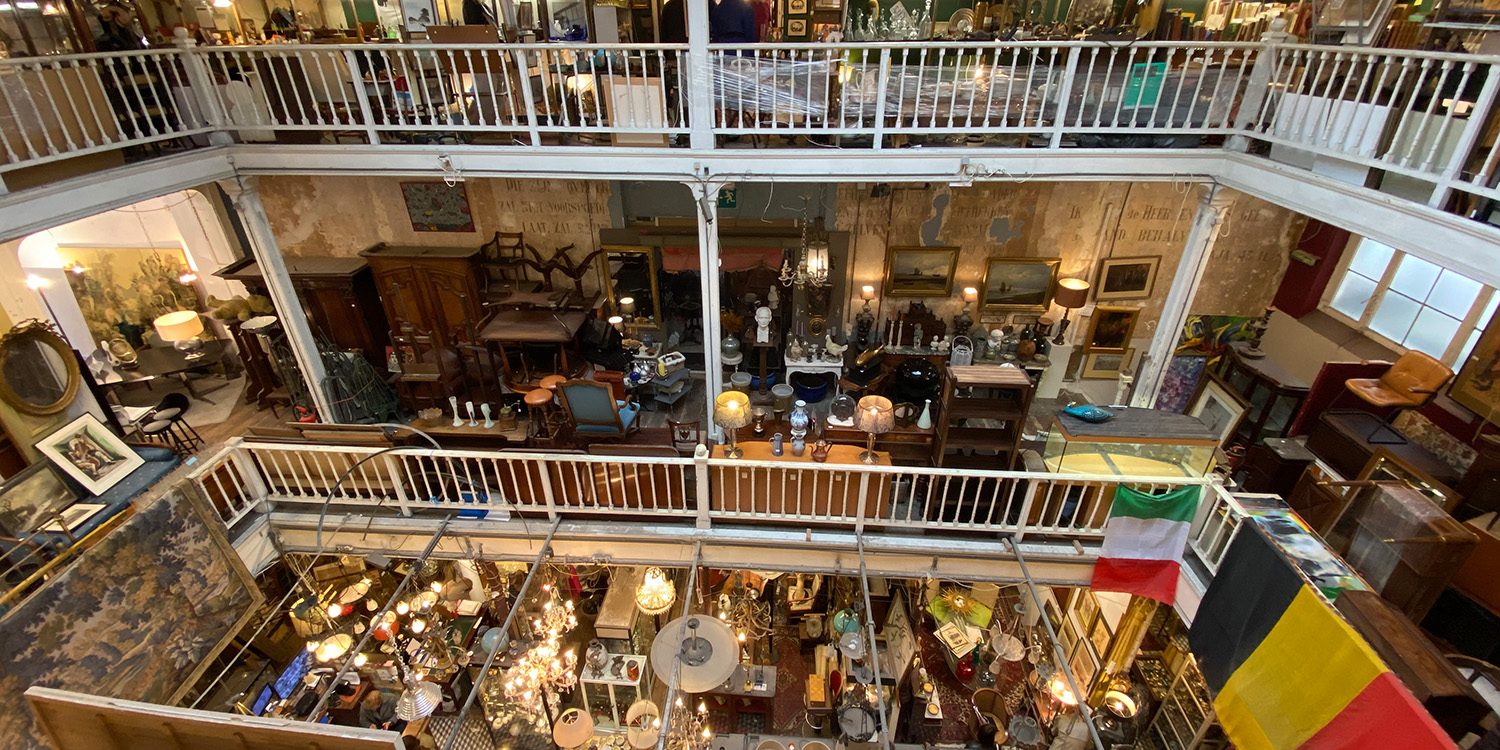
You’ll find second-hand goods and antiques at around 350 stalls. While the market itself has become very touristy, it’s situated in the heart of the fantastic antiques district between Marolles and Sablon. This area is home to dozens of antique shops – some small, some as large as department stores (see photo) – ranging from affordable to luxurious. You’ll also find rustic pubs and stylish cafés in the neighborhood.

For parking, the underground garage at Place Poelaert is ideal. From this elevated square, you can take an elevator down to the Marolles district.

Prices can be quite high. The market has become very touristy and the traders often come from countries where trading is done in a bazaar-like manner.

Ciney Puces

three times a year

Rue du Marché Couvert, Ciney

The flea and antique market in Ciney takes place three times a year over several days, from 10 AM to 6 PM.

It consists of three areas:

  1. The expo hall, where you’ll mainly find especially high-quality antiques such as statues, furniture, paintings, jewelry, and glassware.
  2. On the esplanade, there’s a small market offering a fairly mixed but high-quality range of goods.
  3. What I find most interesting, however, is the “Déballage” on the surrounding car parks: On the first day, which is always a Friday, at exactly 2 PM, the gates open, the dealers rush to their vehicles, and begin unpacking their goods. Buyers wander among them, peeking into the transporters. After about 30 minutes, everything is set up, and the market continues until 6 PM. On the following days, there may be significantly fewer stalls, so the main day is Friday. You will find a wide range of high-quality goods, but the focus is on decoration and furnishings.

In total, there are around 500 stalls. Admission to the grounds is subject to a fee, but there is more than enough free parking available. Prices range from moderate to high, but are mostly reasonable.

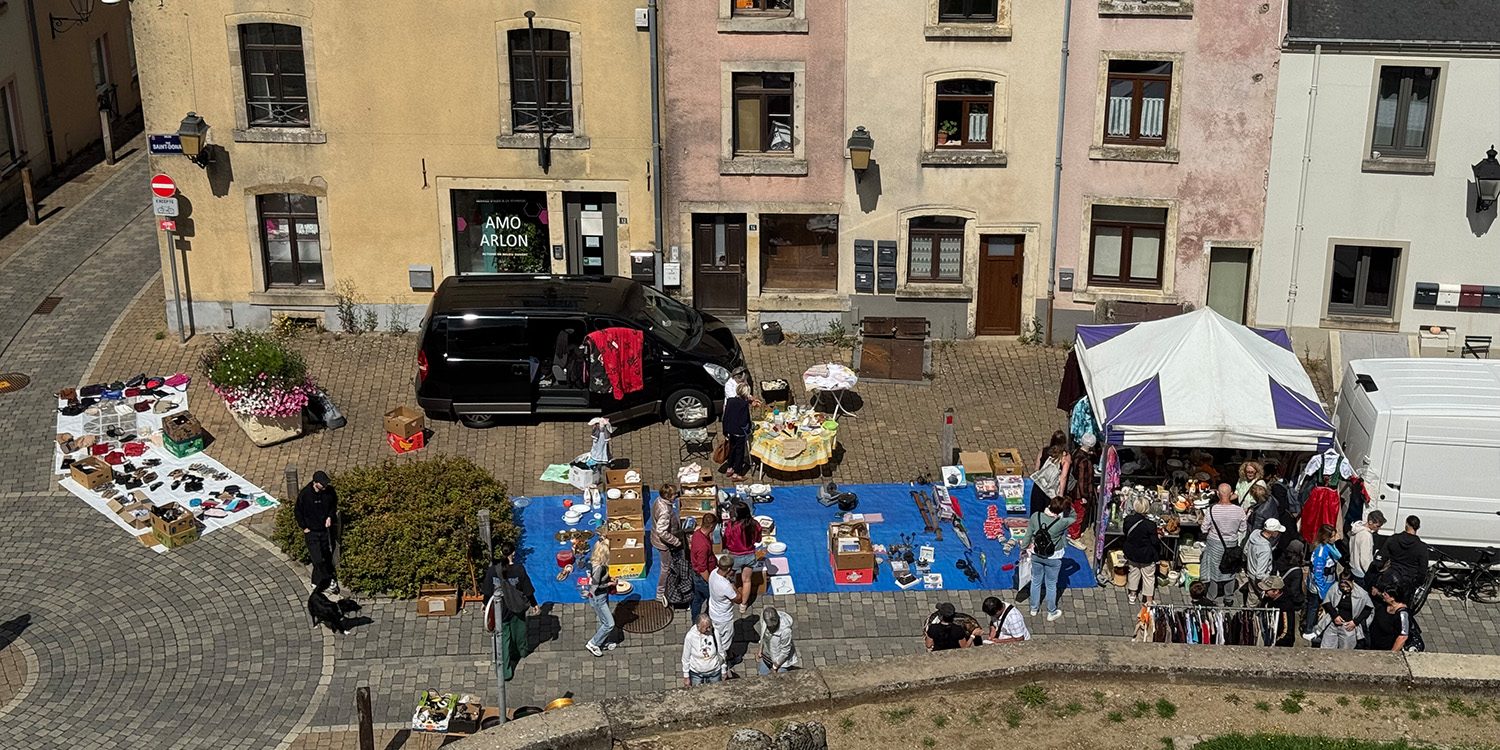
Marché aux Puces du Vieil Arlon

first Sunday of every month from March to October

Grand Place, Arlon

The flea market in Arlon takes place on the first Sunday of every month from March to October in the town center, and can be quite large in good weather.

There is a colorful and varied selection on offer, including goods for specialized collectors as well as true highlights.

A well-maintained underground parking garage is located beneath Place Léopold.

Prices are generally very moderate.

Brocante de Temploux

annually in August

Rue Arsène Grosjean, Namur

The flea market in Temploux (near Namur) is highly esteemed among collectors and takes place once a year in August (Saturday and Sunday) in the streets of the village.

The market focuses primarily on collectibles, with many specialized stalls. There are around 1,200 stalls spread over a 6-kilometer route, along with food stands and a lively program, including fireworks.

Plenty of parking is available, mostly on fields prepared by local farmers.

Prices are generally moderate to low.

The market can get extremely crowded, especially in good weather, but it is exceptionally well-organized, from parking to restrooms. Half the village pitches in to help!

Temploux is my favourite. Unfortunately, the market only takes place once a year.

Tips for Belgian Flea Markets

Dates: Always check online in advance. Even weekly markets can occasionally be cancelled, for example due to another event or a public holiday.

Offer / Attendance: Some markets are covered, but most are only partially or not at all. Light, intermittent rain is usually not a problem, but strong wind or unpleasantly cold weather can significantly reduce the number of stalls. Markets also tend to be quieter on holidays or during school breaks.

Opening hours: Most markets start earlier than the official time, and sellers often begin packing up before the listed closing time. If you’re looking for something specific, it’s best to arrive early.

Language: Depending on the region, Dutch or French – often English as well, or simply some hand gestures.

Bargaining: Prices are generally fair and realistic, but a polite and brief attempt to negotiate 10-20% off is usually acceptable – even if items are labeled with price tags. (Brussels is an exception: prices there often start high, and bargaining is more like a bazaar.) Don’t haggle if the price is already very good. Sometimes sellers will kindly refuse to negotiate if they’ve already offered their best price. In antique shops, bargaining is uncommon.

Payment: Bring enough cash, or locate a nearby ATM.

Bonus tips: Always ask for the price if you find something even halfway interesting – it’s often much lower than you’d expect. If you find something truly great, pick it up or talk to the seller right away – another interested buyer might appear out of nowhere.

You can find more markets and dates here.