
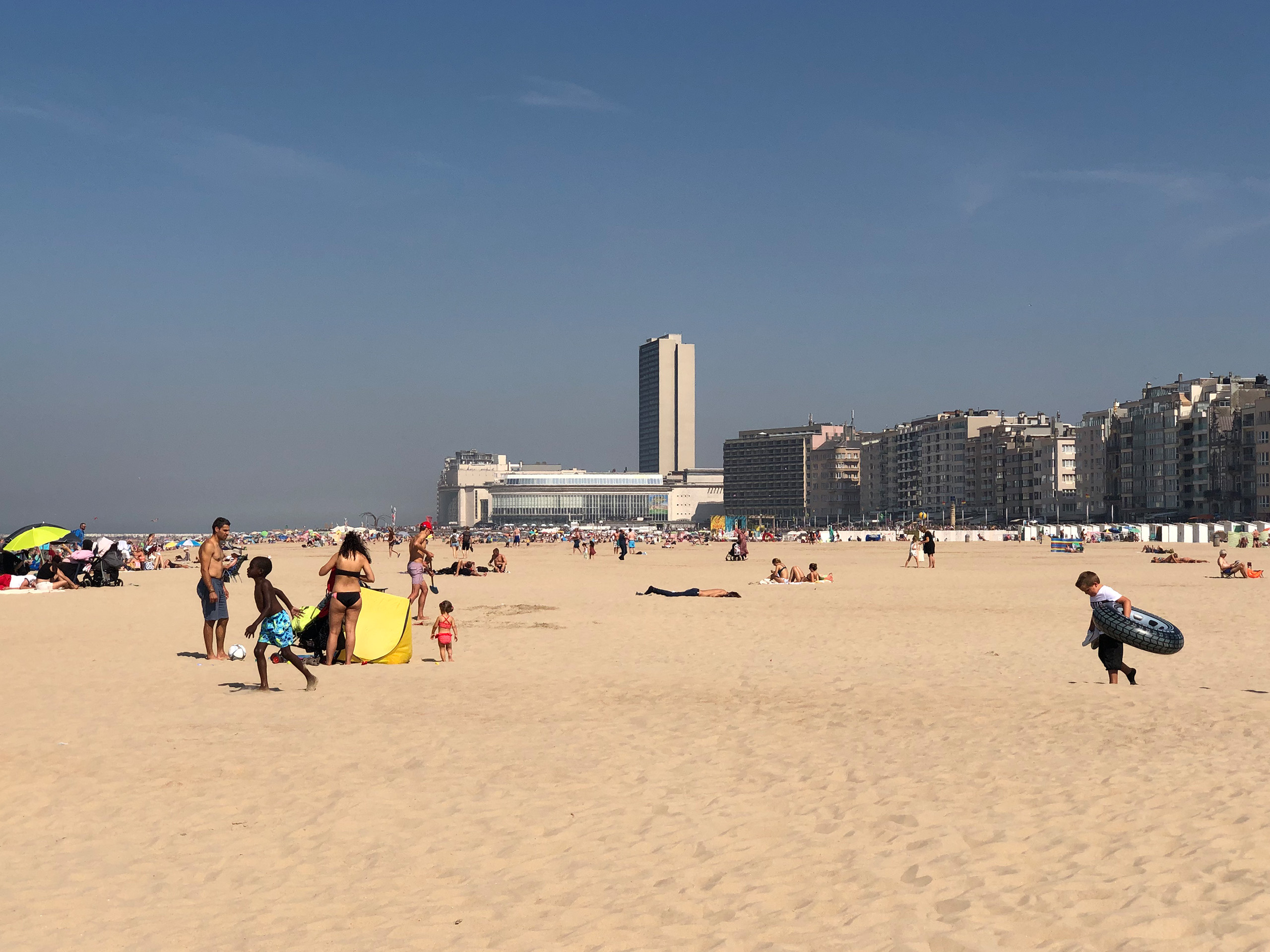
The Belgian coast stretches for 65 kilometers along the North Sea, forming the country’s westernmost coastal area. It runs from Knokke-Heist near the Dutch border to De Panne close to France. Despite its relatively short length, the coastline is densely built-up and heavily geared toward tourism. Thirteen seaside resorts make up the “Kust”, as it is called in Dutch. The entire region lies within the province of West Flanders.
One distinctive feature is the Kusttram, a coastal tram line that spans over 67 kilometers and connects all the seaside towns – from Knokke-Heist to De Panne. It is one of the longest tram lines in the world and is widely used by both locals and tourists.
Tourism plays a central role for the Belgian coast: several million visitors arrive each year, especially during the summer months. Many Belgians own second homes along the coast, and holiday apartments dominate the urban landscape in many towns. Tourism here is strongly seasonal, with beach holidays, gastronomy, and leisure activities at its core.
The entire coastline is bordered by wide sandy beaches, interrupted only occasionally by natural features such as dunes or polder landscapes.
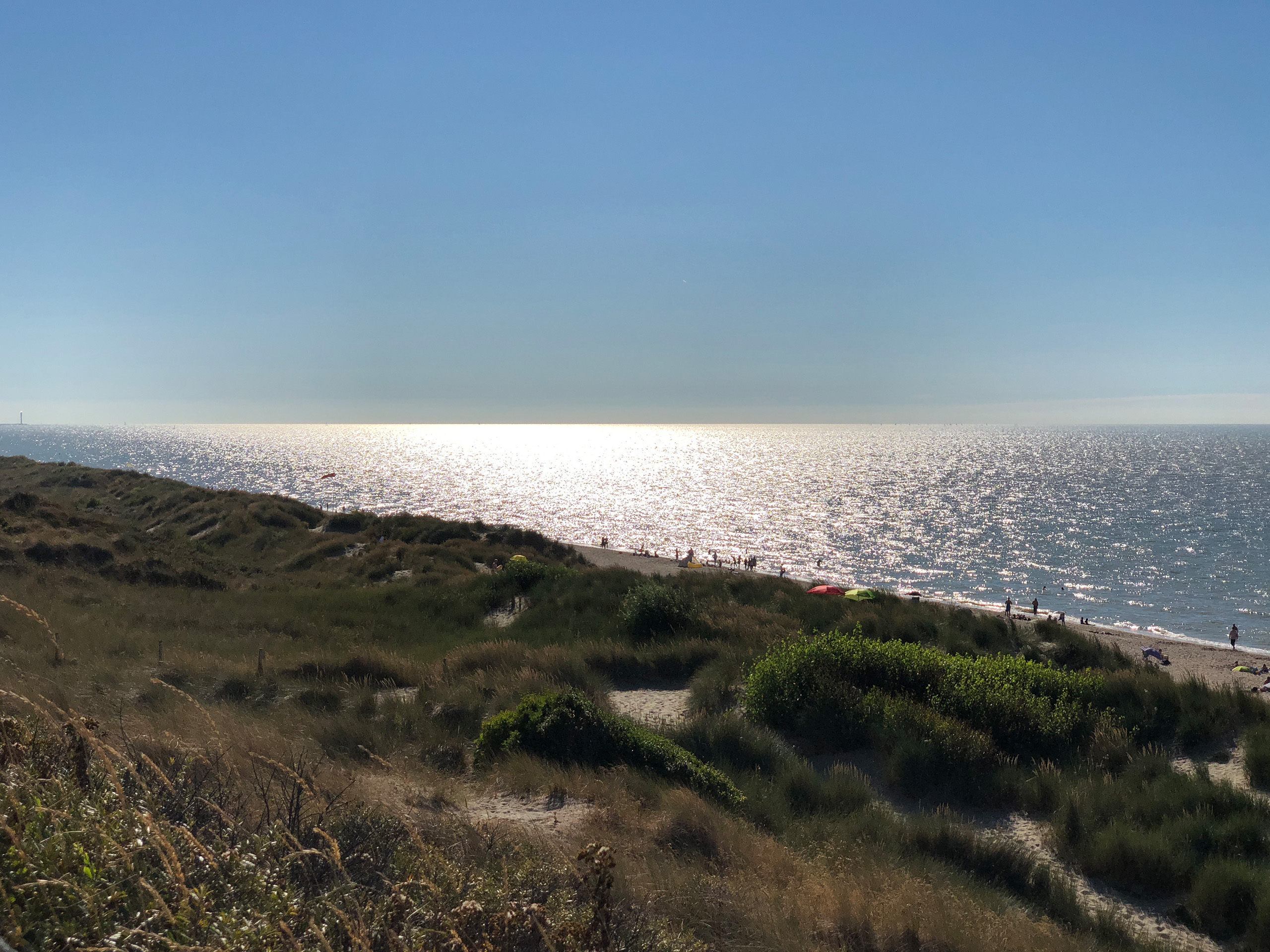
Despite dense development and increasing demand, the Belgian coast remains a place of contrasts: between upscale resorts, urban concentration, and quieter, less frequented stretches, it presents a complex and varied picture – between relaxation, mass tourism, and everyday life.
Below is an overview of the Belgian coastal towns, from north to south.
Knokke-Heist
Knokke-Heist feels like two places in one: an upscale retreat and a lively seaside town. Between galleries, boutiques, and manicured boulevards, a well-to-do crowd sets the tone. The beach is quieter, with long walking paths and expansive dunes. The town is lined with residential blocks and holiday apartments. In summer, terraces fill and bicycles dominate the streets. In winter, it feels empty but not abandoned. The nearby Het Zwin nature reserve adds a quieter dimension. Those seeking refined surroundings are more likely to find them here than spontaneous beachgoers.
Zeebrugge
Zeebrugge is, above all, a port – and it shows. The vast harbour, container terminals, and industry define the landscape. As a tourist destination, it’s more peripheral, which adds a certain charm. There’s a wide beach, often emptier than others, and a small coastal village with fishing traditions. Fresh fish is not only sold here but processed on-site. Much feels raw, functional – appealing to those seeking authenticity. Zeebrugge isn’t a typical holiday spot; it’s a place shaped by work, sea, and wind.
Blankenberge
Blankenberge is loud, bustling, tailored to young people, and made for summer. Along the broad promenade, you’ll find a mix of restaurants, cafés, beach bars, and vacation flats. Especially in July and August, it gets crowded – families, teens, day-trippers. Behind the front row, some traces of old seaside architecture remain, but modern tourism dominates. Off-season, Blankenberge seems a bit on pause.
De Haan
De Haan stands apart: no high-rises, no flashy promenade. The town feels quiet, almost old-fashioned – in the best way. Belle Époque villas, calm streets, and well-kept gardens set the tone. The beach is wide and free from large complexes, with dunes blending gently into the landscape. Visitors often seek peace: families, older couples, regulars. Even in summer, things stay relatively calm. De Haan has character – and that’s what makes it noteworthy. It’s a place for staying, not rushing through.
Bredene
Bredene is simple – and honest in that. The village lies slightly inland, separated from the beach by a stretch of dunes with no promenade. This natural barrier defines the experience: reaching the sea means crossing sand paths, not asphalt. Compared to neighboring towns, Bredene is quieter, less developed, and less commercial. There are basic accommodations, a campground, a few restaurants – mostly practical. One section of the beach is reserved for nudism, a local curiosity. If you’re after bustle, this isn’t the spot. But if you see the sea as a landscape, you’re likely in the right place.
Oostende
Ostend is maybe the only real city on the coast – with everything that entails: a train station, port, cultural venues, shopping streets. The beach is broad, framed by dense urban architecture. Many visit for day trips, concerts, or museums. In the center, it feels urban, with active dining scenes and a rough-edged history. It’s not a typical resort but a coastal metropolis with texture. In summer, it’s lively, but never purely touristic. Oostende remains a place to live and work – and you feel it. The contrast between sea, wind, and concrete is part of its identity.
Middelkerke
Middelkerke is a classic family beach town – functional, accessible, not flashy. The promenade is long and straight, lined with holiday flats, shops, and restaurants. Everything is geared toward summer: wide beaches, playgrounds, events. It’s suited for families with children. Inland, things calm down – the original town lies back from the coast. In winter, Middelkerke feels almost emptied out. The place lives in the rhythm between season and stillness – with the sea as its only constant.
Nieuwpoort
Nieuwpoort is split in two: a historic inland town and a modern coastal resort. Between them runs the harbour canal, lined with boat piers. The beach is spacious and well-kept, the architecture modern but not overwhelming. Summer brings activity – families, water sports, boaters. The old town center is quieter and steeped in Flemish brickwork charm. Nieuwpoort feels well-planned, even intentional – which makes it organized, but not dull. If you’re looking for a mix of beach, town, and harbour, this is a good match.
Koksijde
Koksijde feels expansive: large squares, wide streets, generous beach access. Architecture varies – modern residences alongside older vacation blocks. It caters to families but also older guests. In summer, it becomes lively, but never frantic. The Sint-Idesbald district adds a more cultured note, with galleries and art spaces. Nearby nature reserves like the Hoge Blekker dunes offer a softer contrast to the built environment. If you’re looking for space, comfort, and proximity to the sea, this might be the right place.
De Panne
De Panne, at the westernmost tip, feels slightly out of time. The town has a busy shopping street, many vacation flats, and one of the widest beaches on the coast. In summer, Belgian and French visitors flood in – it gets lively and colorful. Behind the promenade lies an open dune landscape with walking paths. A nearby amusement park draws families. De Panne isn’t a secret, but it has movement. If you’re after sand, proximity to France, and a family vibe, you’ll find it here.

 © VisitBelgium.net
 © VisitBelgium.net
 © VisitBelgium.net
 © VisitBelgium.net
 © VisitBelgium.net
 © VisitBelgium.net